5 gluten-free vegetarian dinners that don’t feel like a compromise — tested on people who didn’t know they were gluten-free

- Updated on Apr 15, 2026
I did not set out to become someone who thinks carefully about gluten-free cooking. It crept up on me the way most useful kitchen skills do — through other people’s needs at my dinner table.
Hosting is one of my greatest joys. I plan menus weeks in advance, I think about how dishes will work together, and I genuinely love the whole production of feeding people in my home. But once you start hosting regularly, the dietary requirements start stacking up. One guest is coeliac. Another is avoiding gluten for other reasons.
A third just mentioned it in passing and you have already filed it away because that is the kind of cook you are. The question becomes: how do you feed a table of mixed eaters without cooking two separate meals, or worse, serving something that feels like it was designed around an absence rather than built around flavour?
The answer, as far as I can tell, is to stop thinking about gluten-free food as a category and start thinking about it as a constraint that points you toward certain ingredients — ingredients that are, in many cases, more interesting than wheat flour ever was. Polenta. Rice. Chickpea flour. Lentils. Good quality corn tortillas. These are not substitutes. They are the whole point.
Every dinner on this list has been cooked for people who were not told it was gluten-free. None of them noticed. Several of them asked for the recipe.
1) Smoky black bean and sweet potato tacos with pickled cabbage
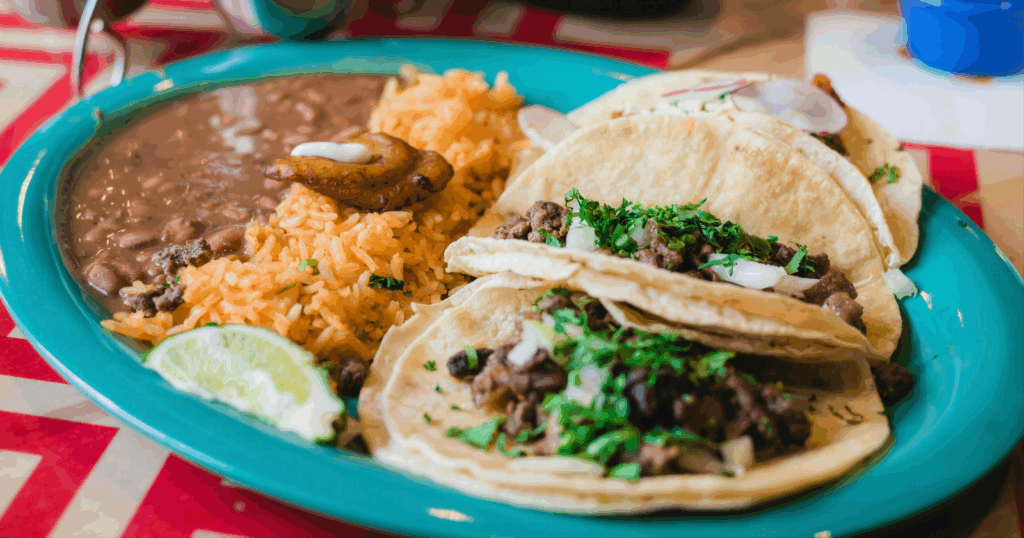
Tacos are the dinner I reach for when I need something fast, satisfying, and guaranteed to work for a mixed table — and good corn tortillas are naturally gluten-free in a way that feels completely unremarkable because everyone loves tacos regardless.
The filling here is black beans cooked down with smoked paprika, cumin, chipotle paste, and a little tomato, stirred through with roasted sweet potato cubes that have gone slightly caramelised at the edges. The pickled cabbage is just finely shredded red cabbage tossed with apple cider vinegar, a pinch of sugar, and salt, left for twenty minutes while everything else comes together.
Serve with sliced avocado, a scattering of fresh coriander, and a lime wedge. The combination of smoky, sweet, acidic, and creamy hits every note a good dinner should, and it comes together in about thirty-five minutes. This is the kind of recipe I developed during the early months of motherhood, when I needed dinner on the table fast and with one hand available at all times.
It has stayed in the rotation because it is genuinely that good, not just because it is convenient.
2) Sri Lankan-style red lentil dal with coconut milk and curry leaves
Dal is the dinner that taught me more about vegetarian cooking than almost anything else. It is endlessly adaptable, deeply satisfying in a way that silences the people who ask where the protein is, and one of the most naturally gluten-free dishes in existence — not because anyone engineered it that way, but because it never needed wheat to begin with.
This version uses red lentils cooked until just collapsing, stirred through with a tempering of curry leaves, mustard seeds, dried chilli, and garlic fried briefly in coconut oil until fragrant, then finished with coconut milk for richness and a good squeeze of lime to lift it. Serve over white rice with a simple cucumber and tomato salad on the side.
The key to a dal that does not feel like a weeknight compromise is the tempering — the oil-fried spices poured over the top at the end. Do not skip it. That is where the flavour lives.
3) Baked polenta with roasted cherry tomatoes, white beans, and basil oil
Polenta gets an unfair reputation as bland and laborious, and I think it is because most people have had it made poorly — underseasoned, undercooked, or served without anything good on top. Done properly, it is one of the most comforting things you can put on a table, and it happens to be completely gluten-free without any substitution required.
For this dish, the polenta is baked rather than stirred — combined with stock, a good amount of parmesan, and olive oil, then cooked in the oven until set and golden at the edges. The top is loaded with slow-roasted cherry tomatoes that have collapsed into jammy pools, white beans tossed through with the tomato juices, and a loose basil oil made by blending a handful of basil with good olive oil and a pinch of salt.
I have served this at dinner parties when I wanted something that looked impressive without requiring me to stand at the stove stirring while my guests helped themselves to wine. It works. No one has ever identified polenta as the base and thought less of it for it.
4) Indian-spiced cauliflower and chickpea traybake with raita
The traybake is the format I trust most on busy weeknights because the oven does the work and there is only one pan to wash. This version is built around cauliflower and chickpeas tossed in a marinade of yoghurt, garam masala, turmeric, cumin, coriander, and a little chilli, roasted at high heat until the cauliflower is charred at the tips and the chickpeas are crispy.
Serve it with a simple raita — natural yoghurt stirred with grated cucumber, mint, and a pinch of cumin — and either rice or warm gluten-free flatbreads if you want something to scoop with. The yoghurt marinade is what makes the spicing cling properly and gives the finished dish that slightly charred, tandoor-adjacent quality that makes it feel like more than just roasted vegetables.
My husband is not vegetarian, but this is one of the dishes that makes the question largely irrelevant. The chickpeas provide enough texture and substance that nobody at the table is looking for something else.
5) Mushroom and herb frittata with roasted red pepper salad
A frittata is perhaps the most quietly useful dinner in a vegetarian kitchen, and it is one of those things that people forget is gluten-free because it is simply eggs — no flour required, no alternative needed, no explanation necessary.
This one is built with a base of sautéed mushrooms cooked down with thyme and garlic until most of their moisture has gone and they are concentrated and deeply savoury, then set in eggs whisked with a little cream and a generous amount of parmesan. It finishes in the oven until just set in the centre — slightly wobbly, never rubbery.
The roasted red pepper salad alongside it is charred peppers peeled and dressed with olive oil, sherry vinegar, capers, and fresh parsley. It is bright and a little sharp against the richness of the frittata, and together they make a dinner that feels considered and complete rather than assembled from whatever was left over.
This is also one of those dinners that works at room temperature, which means it travels well to a friend’s place and holds its own at a table where you are feeding people with different requirements and do not want the logistics to show.
The rule that makes all of these work
None of these recipes were designed to be gluten-free in the way that something marked “free from” on a supermarket shelf is designed around an absence. They are built around ingredients that are simply good — lentils, polenta, eggs, chickpeas, corn tortillas — and those ingredients happen not to contain wheat.
That distinction matters more than it might seem. Food that is built around what it lacks tends to taste like it. Food that is built around what it has — around bold spicing, good fat, proper seasoning, and contrast — tastes like dinner. That is all anyone at your table is looking for, regardless of what they can or cannot eat.
Start there, and the compromise disappears entirely.
Comments