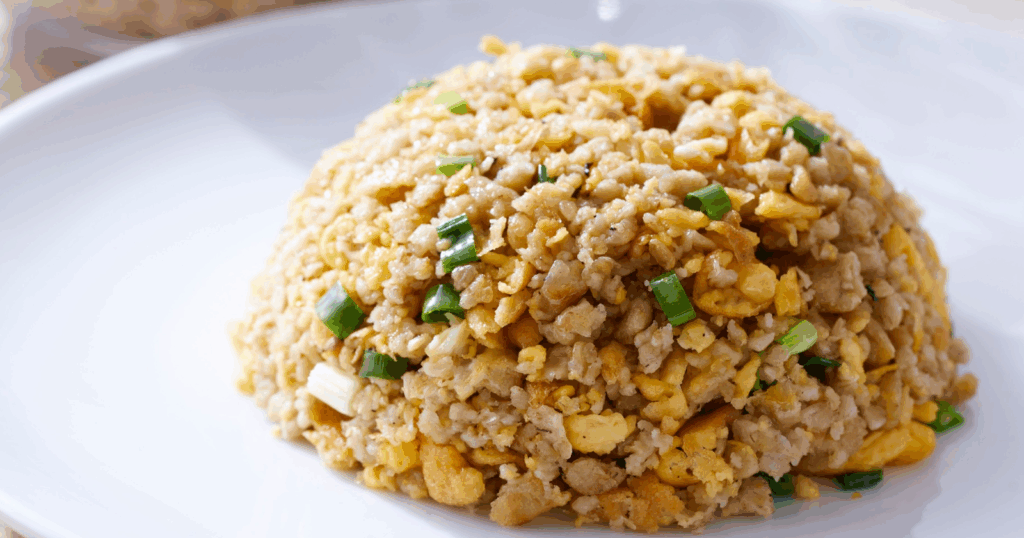
The egg fried rice I make when the fridge is almost empty and I need something satisfying in under 15 minutes

- Updated on Apr 23, 2026
I’ve made this dish probably hundreds of times over the years.
It started as a survival meal during my college days when dorm kitchens had limited ingredients and even more limited time before the next student needed the stove. Now it’s become something more: a reminder that constraints often lead to the most satisfying solutions.
Why this recipe works when nothing else will
The beauty of egg fried rice lies in its forgiving nature. Unlike pasta that needs precise timing or stir-fries that demand high heat and constant attention, this dish adapts to whatever energy level you bring to it. The eggs provide protein and richness, while day-old rice actually works better than fresh because it’s drier and won’t turn mushy.
Most importantly, this isn’t about following a recipe perfectly. It’s about understanding a few core principles that let you work with whatever’s available. Think of it as culinary jazz: once you know the basic rhythm, you can improvise with confidence.
The non-negotiables you actually need
Let’s be clear about what’s essential here. You need eggs, cooked rice (preferably cold), some form of fat for the pan, and soy sauce. That’s it. Everything else is negotiable.
The rice should ideally be a day old, straight from the fridge. Fresh rice contains too much moisture and will clump together instead of separating into individual grains. If you only have fresh rice, spread it on a plate and let it cool for ten minutes while you prep everything else.
For the fat, I use sesame oil when I have it because it adds depth, but regular vegetable oil works fine. Even butter creates something delicious, just different. The point is to stop overthinking and start cooking.
My streamlined technique
Here’s how I approach this every single time. First, I break up the cold rice with my hands right in the container, separating any clumps. This takes thirty seconds and saves you from fighting stubborn rice chunks in the hot pan later.
Next, I beat three eggs in a bowl with a pinch of salt. Nothing fancy. While the pan heats over medium-high heat with a tablespoon of oil, I quickly chop whatever vegetables I’m using into small, uniform pieces. Tonight it might be the last quarter of an onion and some wrinkled bell peppers. Tomorrow it could be frozen peas straight from the freezer.
The key moment comes when you add the eggs to the hot pan. Let them sit for just a few seconds until they start to set on the bottom, then gently scramble them until they’re about 80% cooked. Remove them immediately. Overcooked eggs turn rubbery and lose their creamy texture.
Add a bit more oil to the same pan, toss in your vegetables, and give them two minutes to soften. Then add the rice, breaking up any remaining clumps with your spatula. The satisfying sizzle tells you the pan’s hot enough. After the rice heats through and starts to crisp slightly, return the eggs, add soy sauce, and toss everything together.
The vegetables that save the day
I’ve learned to see vegetables differently since simplifying my cooking approach. That half an onion isn’t just an ingredient; it’s the foundation of flavor. Those frozen peas aren’t a compromise; they’re perfectly preserved at peak freshness, ready whenever you need them.
My regular rotation includes whatever’s lurking in the crisper drawer. Carrots add sweetness and crunch. Mushrooms bring umami depth. Even lettuce, chopped and added at the very end, provides freshness and texture. During a particularly sparse week, I’ve used just scallions and been completely satisfied.
The trick is cutting everything small and uniformly. This isn’t just about aesthetics. Uniform pieces cook at the same rate, and smaller pieces cook faster, keeping you within that fifteen-minute window.
Seasoning without overthinking
Good egg fried rice doesn’t need a dozen bottles of sauce. Start with soy sauce, about two tablespoons for three cups of cooked rice. Add it around the edges of the pan rather than directly on the rice. This lets it heat up and caramelize slightly, developing more complex flavors.
If you have garlic or ginger, mince them fine and add them with the vegetables. A squeeze of lime at the end brightens everything. Sometimes I’ll add a splash of rice vinegar for tang or a drizzle of sriracha for heat. But these are bonuses, not requirements.
The most important seasoning is actually the one most people forget: taste as you go. Add soy sauce gradually, remembering you can always add more but can’t take it back.
Making it more than just survival food
Here’s where the self-development angle comes in. This dish taught me that creativity thrives under constraints. When you have unlimited options, it’s easy to get paralyzed. When you have three ingredients and fifteen minutes, you just start moving.
I’ve noticed this principle extends beyond cooking. The mornings when I have just twenty minutes to journal before work often produce more insights than leisurely weekend sessions. The workout squeezed between meetings tends to be more focused than the one with unlimited time.
There’s also something meditative about making egg fried rice. The repetitive motion of stirring, the attention required to prevent sticking, the immediate feedback of smell and sound. It pulls you into the present moment in a way that complicated recipes rarely do.
The variations that keep it interesting
Once you nail the basic version, small tweaks keep it from becoming boring. Sometimes I’ll make it Thai-style with basil and a splash of soy sauce mixed with brown sugar. Other times I go for a breakfast version with everything bagel seasoning and a fried egg on top.
You might have read my post on building flavor layers with simple ingredients. The same principle applies here. Toast some sesame seeds in the dry pan before starting. Add a handful of cashews with the vegetables. Finish with fresh herbs if you have them.
The point isn’t to complicate things. It’s to recognize that mastery of basics gives you freedom to play.
Embracing the imperfect solution
Not every meal needs to be Instagram-worthy or nutritionally optimized. Sometimes you just need something warm, filling, and comforting that doesn’t require a grocery run or mental gymnastics.
This egg fried rice represents a different kind of success: the ability to create something satisfying from almost nothing, to transform limitation into opportunity, and to recognize that good enough is often exactly what you need.
The next time you’re staring into an almost-empty fridge, resist the urge to order delivery. Give yourself fifteen minutes. Trust the process. You might surprise yourself with what you can create when you stop waiting for perfect conditions and start working with what you have.
Comments