5 vegetarian sheet pan dinners where everything goes in the oven together and comes out tasting like you planned it all along

- Updated on Apr 23, 2026
Last night, somewhere around 6:30, you probably stood in your kitchen doing that familiar weeknight shuffle: checking the clock, opening the fridge for the third time hoping something new had materialized, and mentally calculating whether you had enough energy to tackle actual cooking.
What if instead, you’d simply arranged everything on one pan, slid it into the oven, and emerged forty minutes later with a dinner that looked intentional, tasted incredible, and left you with exactly one pan to wash?
This isn’t fantasy. After years of perfecting the art of weeknight efficiency (especially now that dinner prep often involves entertaining my son with one hand while chopping with the other), I’ve discovered that sheet pan dinners aren’t just about convenience.
They’re about understanding how ingredients behave together under heat, which vegetables play nicely as neighbors, and how to build flavors that develop and deepen without any intervention from you.
The vegetarian sheet pan dinners I’m sharing today go beyond the usual “roasted vegetables with stuff” approach. Each one is designed as a complete ecosystem where proteins, vegetables, and seasonings work in harmony, finishing at exactly the same time with complementary textures and flavors that suggest far more effort than you actually exerted.
1) Mediterranean chickpea and halloumi with lemon-herb oil
The first time I made this combination, I was skeptical that halloumi would work on a sheet pan alongside vegetables. Wouldn’t it melt? Wouldn’t it stick? Neither happened. Instead, what emerged from my oven was a pan of bronzed cheese with perfectly charred edges, surrounded by caramelized vegetables and crispy chickpeas that had everyone asking for the recipe.
Start with a can of chickpeas, drained and patted completely dry (this step matters more than you’d think). Cut a block of halloumi into thick slices, quarter a red onion, halve a pint of cherry tomatoes, slice a zucchini into rounds, and chunk up a red bell pepper. Everything except the halloumi gets tossed with olive oil, dried oregano, smoked paprika, and salt. Arrange it all on your sheet pan with the halloumi nestled between the vegetables.
While everything roasts at 425°F for 25-30 minutes, whisk together the simplest but most transformative finishing touch: lemon juice, minced garlic, chopped parsley, and good olive oil. When you drizzle this over the hot ingredients straight from the oven, the sizzle and steam create an aromatic moment that makes the whole house smell like a Greek taverna.
The chickpeas develop an almost nutty crunch while staying creamy inside. The halloumi turns golden without melting into oblivion. The vegetables release their juices, concentrating their flavors and creating caramelized edges. Serve with warm pita or over couscous, though we often just grab forks and eat straight from the pan with good bread.
2) Sesame-ginger tofu with broccolini and sweet potato
My relationship with tofu changed completely when I discovered what high heat and the right marinade could do. This combination transforms humble ingredients into something that rivals any takeout, with crispy-edged tofu, caramelized sweet potatoes, and perfectly charred broccolini.
Press a block of extra-firm tofu thoroughly, then cube it. Peel and cube two sweet potatoes into similar-sized pieces. Trim a bunch of broccolini. The marinade brings everything together: soy sauce, sesame oil, rice vinegar, freshly grated ginger, minced garlic, and a touch of maple syrup. Toss the tofu in half this mixture (reserve the rest), then arrange everything on your pan with tofu in the center and vegetables around the edges.
At 400°F for 35 minutes, magic happens. Halfway through, drizzle that reserved marinade over the vegetables and give the pan a gentle shake. In the final five minutes, scatter sesame seeds over everything. They’ll toast to perfection in the residual heat.
The marinade caramelizes on the pan, creating those crispy bits you’ll want to scrape up with your rice. Sweet potato’s natural sugars play beautifully with the umami-rich sauce, while broccolini’s slight bitterness keeps everything balanced. Every bite offers different textures: crispy tofu corners, creamy sweet potato centers, tender-crisp broccolini stems.
3) Indian-spiced cauliflower and potato with paneer
Walking through my local Indian grocery store one afternoon, I wondered why I always made these flavors in separate pots and pans. This sheet pan version captures all the warmth and complexity of Indian spices with none of the multi-pot choreography.
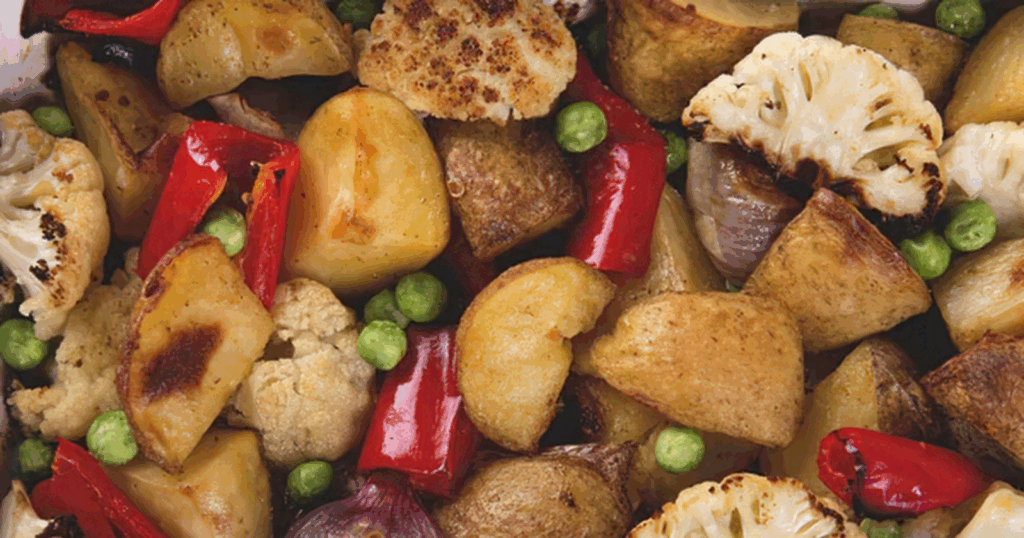
Cut a cauliflower into florets, cube three potatoes (keep the skin on for better texture), and cube 250g of paneer. In a large bowl, create a spice paste with turmeric, ground cumin, ground coriander, garam masala, chili powder to taste, salt, and enough oil to bring it together. Add a squeeze of lemon juice. Coat everything thoroughly in this golden mixture, spread on your pan, and tuck in a few whole garlic cloves still in their papery skins.
After 40 minutes at 425°F, with frozen peas added in the last 10 minutes, you’ll pull out a pan that looks like you’ve been cooking all afternoon. Squeeze those sweet roasted garlic cloves over everything, scatter fresh cilantro, and add a cooling dollop of yogurt.
The high heat blooms the spices, creating an aromatic crust on everything it touches. Potatoes get crispy outside while staying fluffy within, cauliflower edges char beautifully, and paneer turns golden without losing its shape. Each element maintains its identity while contributing to the whole.
4) Autumn harvest pan with maple-mustard Brussels sprouts and white beans
There’s a specific moment each fall when I spot the first Brussels sprouts at the farmers market and know exactly what’s for dinner. This combination celebrates everything good about autumn vegetables, with a maple-mustard glaze that turns simple ingredients into something special.
Halve a small butternut squash, remove seeds, and cut into half-moons. Trim and halve Brussels sprouts. Drain a can of white beans. Slice two shallots. The glaze combines maple syrup, Dijon mustard, apple cider vinegar, and olive oil. Toss everything together with fresh thyme and salt, arranging on your pan with squash pieces cut-side down for maximum caramelization.
After 30-35 minutes at 425°F, with pecans added in the last 5 minutes for toasting, you’ll have a pan of deeply caramelized vegetables with a glossy glaze. Crumble some goat cheese over the hot vegetables if you like that tangy contrast.
Brussels sprouts lose any harshness and become sweet and nutty. Butternut squash turns creamy with crispy edges. The beans absorb all the surrounding flavors while adding satisfying substance. It’s autumn on a pan.
5) Mexican-inspired black bean and pepper pan with lime crema
Some nights call for bold, bright flavors that wake up your palate. This Mexican-inspired pan delivers exactly that, with colorful vegetables, protein-rich beans, and a cooling lime crema that brings everything together.
Drain a can of black beans. Cut two bell peppers (mix colors for visual appeal) into strips. Slice two zucchinis into half-moons. Quarter a red onion. Halve cherry tomatoes. Toss with olive oil, ground cumin, smoked paprika, oregano, and salt. Arrange on your pan and nestle in chunks of feta cheese.
While it roasts for 25-30 minutes at 425°F, mix Greek yogurt with lime juice, lime zest, and salt for your crema. Add frozen corn to the pan in the last 5 minutes. It’ll heat through perfectly without overcooking.
The peppers char at the edges while keeping some bite, zucchini releases just enough moisture, and black beans develop slightly crispy edges. Feta softens into creamy pockets without melting completely. Serve with warm tortillas, that lime crema, fresh cilantro, and avocado slices for a dinner that feels like a celebration.
Making sheet pan magic your own
These five dinners have earned permanent spots in our rotation because they deliver on both flavor and practicality. Once you understand the principles behind successful sheet pan cooking (similar-sized cuts, proper spacing, enough oil for browning, complementary cooking times), you can create endless variations.
Start with these recipes as written to understand how they work, then make them yours. Swap vegetables based on seasons and sales. Adjust spices to match your heat tolerance. Add different proteins or skip them entirely. The beauty of sheet pan cooking lies in its flexibility and forgiving nature.
What matters most is that you’re getting wholesome, delicious food on the table without the stress of juggling multiple cooking methods. These dinners prove that vegetarian cooking can be both simple and spectacular, that one pan is plenty, and that sometimes the best meals are the ones that practically cook themselves while you handle everything else life throws at you.
Comments