7 vegetarian dinners inspired by street food from around the world — bold flavours, simple techniques, nothing that requires specialist ingredients

- Updated on Apr 24, 2026
The smell hits you first. Charcoal smoke mixing with cumin and coriander, maybe a hint of something sweet caramelizing on a hot griddle. You follow your nose through the crowd until you find it: a tiny cart, a vendor with practiced hands, and food that makes you forget everything else exists for a moment.
Street food taught me that the best meals don’t need fancy equipment or hard-to-find ingredients. They need bold flavours, smart techniques, and the confidence to trust your instincts. After discovering street food recipes through cookbooks and food documentaries, I’ve brought those lessons back to my kitchen.
These seven recipes prove you don’t need a plane ticket to experience those flavours. Everything here uses ingredients you’ll find at your regular supermarket. No special trips to import stores, no ordering obscure spices online. Just real food that delivers on taste.
1) Mumbai pav bhaji
Pav bhaji changed how I think about vegetables. It’s basically a spiced vegetable mash served with buttered rolls, but calling it that is like calling the ocean “some water.”
Start by boiling potatoes, cauliflower, and peas until they’re falling apart soft. While they cook, work on your base: butter, onions, tomatoes, and bell peppers sautéed until they’re breaking down. The magic happens when you add ginger-garlic paste and a spoonful of store-bought pav bhaji masala (or make your own with cumin, coriander, and red chilli powder).
Mash everything together right in the pan. Not delicately – really go for it. Add more butter than seems reasonable. Street vendors use a flat metal masher and work the mixture until it’s somewhere between chunky and smooth. Serve it with dinner rolls toasted in butter, raw onions, and lemon wedges.
The lesson here goes beyond cooking. Sometimes breaking things down completely is how you build something better. I think about that every time I make this dish.
2) Mexican street corn tacos
Elote walked so these tacos could run. Taking the flavours of Mexican street corn and stuffing them into tortillas feels like cheating, but the best kind.
Cut corn kernels off four cobs and char them in a dry skillet until they’re getting dark spots and popping. Mix mayo, lime juice, and chilli powder into a sauce. Crumble some feta (or use cotija if you can find it). Chop cilantro.
Warm corn tortillas directly over your gas burner or in a dry pan. Load them with the charred corn, drizzle the mayo mixture, sprinkle the cheese and cilantro. Add pickled jalapeños if you want heat.
Growing cilantro on my balcony means I always have it fresh for dishes like this. There’s something grounding about stepping outside to snip herbs you’ve grown yourself, even if it’s just a small pot in a city apartment.
3) Bangkok-style pad see ew
Most pad see ew recipes will tell you that you need a wok and volcanic heat. They’re wrong. I’ve made this successfully in a regular skillet more times than I can count.
The trick is working in batches and not crowding the pan. Soak wide rice noodles in hot water until they’re pliable but still firm. Mix soy sauce, dark soy sauce for colour, and a pinch of sugar for your sauce.
Get your pan screaming hot. Add oil, then pressed tofu cubes. Let them sit without moving until they’re golden. Push them aside, add more oil, crack in an egg. Scramble it roughly, then add the drained noodles and sauce. Toss everything for about two minutes. Throw in Chinese broccoli or regular broccoli at the end.
The whole process takes less than five minutes once your pan is hot. Move with purpose, not panic. Trust the process.
4) Middle Eastern falafel bowls
Forget deep frying. These baked falafels are easier, less messy, and still deliver that crispy-outside, fluffy-inside texture that makes falafel irresistible.
Drain a can of chickpeas and blend them with parsley, cilantro, onion, garlic, cumin, and flour. The mixture should hold together when squeezed but not be wet. Form into balls, brush with oil, and bake at 400°F for 20 minutes, flipping once.
Build your bowl: quinoa or rice as the base, cucumber-tomato salad, pickled red cabbage, the falafel, and tahini sauce made from tahini, lemon juice, and water. Add hot sauce if that’s your thing.
This is assembly cooking at its finest. Each component is simple, but together they create something complex and satisfying.
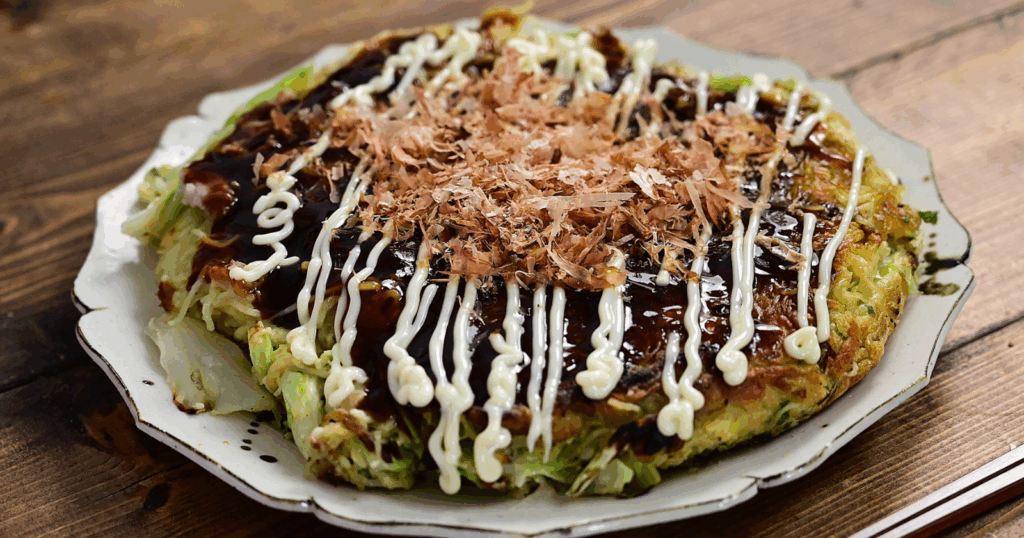
5) Japanese okonomiyaki
Okonomiyaki translates to “grilled as you like it,” which tells you everything about the spirit of this dish. It’s a savoury pancake that welcomes whatever vegetables you have lying around.
Make a batter with flour, water, and eggs. Shred cabbage finely – this is your main vegetable. Add shredded carrots, corn, whatever else needs using up. Mix it all together. The ratio should be mostly vegetables held together by just enough batter.
Cook it like a thick pancake in a skillet with oil. Five minutes per side, until it’s golden and the vegetables are tender. Top with mayo, soy sauce, and if you’re feeling fancy, some seaweed flakes.
I discovered this recipe while exploring different cultural approaches to simple cooking. Watching videos of home cooks making it with such casual confidence reminded me that cooking doesn’t need to be complicated to be good.
6) Indian chaat-style loaded sweet potatoes
Chaat is basically India’s answer to loaded nachos, but with more complex flavours and usually healthier ingredients. This version uses roasted sweet potatoes as the base.
Roast whole sweet potatoes until they’re completely soft inside. Split them open and mash the flesh slightly. Top with boiled chickpeas, diced onions, tomatoes, and cilantro. Drizzle with yogurt mixed with a little water and salt. Add tamarind chutney (or use brown sauce mixed with a splash of vinegar and sugar as a substitute).
The key is the contrast: hot and cold, sweet and tangy, soft and crunchy. Sprinkle some crunchy sev on top if you can find it, or use crushed cornflakes for texture.
7) Vietnamese banh mi-inspired rice bowls
Taking the flavours of banh mi and turning them into a rice bowl makes this accessible any night of the week. No special bread required.
Quick-pickle julienned carrots and daikon in rice vinegar, sugar, and salt. Let them sit while you prepare everything else. Cook jasmine rice. Pan-fry tofu with soy sauce and a touch of sugar until caramelized.
Assemble bowls with rice, the pickled vegetables, cucumber strips, cilantro, and jalapeño slices. Mix mayo with sriracha for a quick sauce. Add crushed peanuts on top.
The pickled vegetables do the heavy lifting here, cutting through the richness and adding that distinctive banh mi tang.
Bringing it all together
These recipes aren’t about perfect authenticity. They’re about capturing the spirit of street food: bold flavours, straightforward techniques, and the confidence that comes from making something delicious without overthinking it.
Every one of these dishes taught me something. Sometimes it was a technique, like how high heat and confident movement can replicate wok cooking in a regular pan. Sometimes it was about flavour balance, understanding how acidity cuts through richness or how texture contrast keeps every bite interesting.
But mostly, they taught me that good food doesn’t need to be complicated. Street vendors work with basic equipment and whatever ingredients they can source locally. They succeed through repetition, intuition, and understanding that feeding people well is both an art and a deeply practical skill.
Start with whichever recipe calls to you. Make it once, then make it again. Adjust it to your taste. That’s how street food evolves anyway, through countless iterations by cooks who know their customers and trust their instincts.
The best part? Once you master these techniques and flavour profiles, you’ll start seeing opportunities everywhere. That leftover rice becomes fried rice with pad see ew seasonings. Those spare chickpeas turn into impromptu falafel. You stop following recipes and start cooking by feel.
That’s when cooking becomes more than just feeding yourself. It becomes a practice, a meditation, a way of connecting with cultures and people you might never meet. All from your own kitchen, with ingredients from your regular grocery store.
Comments