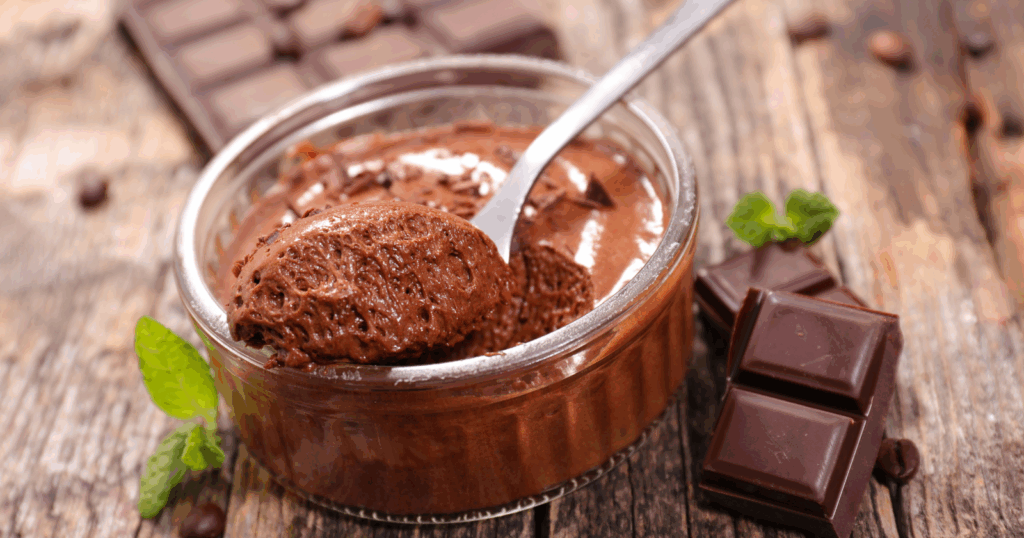
The chocolate mousse I make with three ingredients that nobody believes doesn’t have cream in it

- Updated on Apr 28, 2026
Picture this: I’m standing in my kitchen, watching my sister’s face shift from skeptical to utterly shocked as she takes her first spoonful of chocolate mousse. “Wait, there’s seriously no cream in this?” she asks, already reaching for another bite.
This happens every single time I serve this dessert. Without fail, someone will pull me aside and ask for the “real” recipe, convinced I’m hiding some secret dairy ingredient.
The truth is surprisingly simple. This mousse uses just three ingredients, takes about fifteen minutes to make, and has become my go-to dessert for everything from dinner parties to those moments when I need something indulgent at 9 PM on a random Wednesday.
It’s one of those recipes that taught me an important lesson about cooking and life: sometimes the best solutions are the ones that strip away complexity rather than add to it.
The magic of aquafaba
The star of this show is something you probably threw away last week: chickpea water. Yes, that liquid you drain from a can of chickpeas. In the culinary world, we call it aquafaba, and it’s about to become your new best friend.
I discovered aquafaba during a particularly memorable afternoon at a vegetarian restaurant. The chef, who spoke maybe ten words of English, kept pointing at a bowl of what looked like soapy water, grinning and making whipping motions with his hand. Twenty minutes later, I watched him transform that chickpea liquid into perfect meringues. My mind was completely blown.
Aquafaba works because the proteins and starches from the chickpeas create a structure similar to egg whites when whipped. It’s nature’s own molecular gastronomy, happening right there in a humble can of legumes. The best part? Unlike egg whites, aquafaba is incredibly forgiving. You can overwhip it, underwhip it, and it still manages to work its magic.
When I first started experimenting with aquafaba back home, I went through a phase where I tried to turn everything into foam. David still jokes about the week I served “chickpea cloud” with every meal. But this chocolate mousse? This one stuck around for good reason.
Why simplicity creates confidence
Here’s something I’ve learned from both cooking and life: when you remove unnecessary elements, what remains becomes stronger. Every morning, I practice yoga with nothing but my mat and breath. No music, no fancy gear, just movement and breath. It’s the same principle that makes this mousse so brilliant.
Most traditional chocolate mousse recipes read like chemistry experiments. Separate eggs, temper chocolate, fold carefully, chill precisely. Each step is another opportunity for something to go wrong, another reason to feel like maybe you’re not cut out for “fancy” desserts. But when you strip it down to three ingredients, something shifts. Suddenly, you’re not following a recipe so much as playing with food.
This kind of confidence building through simplification applies everywhere. You might have read my post on mastering Indian dal with five spices instead of fifteen. Same concept. When you remove the barriers between you and success, you stop overthinking and start creating.
The three-ingredient approach also forces you to pay attention to quality. When chocolate is doing most of the heavy lifting, you want the good stuff. I keep a bar of 70% dark chocolate in my pantry specifically for this mousse. Not the fanciest thing in the world, but definitely not the waxy stuff from the checkout aisle.
The technique that changes everything
Making this mousse is almost meditative. First, you melt your chocolate. I do this in a bowl over simmering water because microwaves and chocolate have never been friends in my kitchen. While that’s happening, pour the aquafaba from one can of chickpeas into your mixer bowl. If you don’t have a stand mixer, a hand mixer works fine. I made this with a whisk once during a power outage. My arm hurt for two days, but the mousse was still incredible.
Whip the aquafaba until you get stiff peaks. This takes longer than egg whites, maybe eight to ten minutes with a mixer. Don’t panic if it looks like nothing’s happening for the first five minutes. Trust the process. Once you see those peaks forming, add your sugar gradually while still whipping. I use about three tablespoons of regular granulated sugar, but you can adjust to taste.
Now comes the crucial moment. Your melted chocolate should be warm but not hot. If it’s too hot, it’ll deflate your aquafaba. Too cold, and you’ll get chocolate chunks. I usually let it sit for about two minutes after melting, giving it a stir every thirty seconds.
Pour the chocolate into the whipped aquafaba in a thin stream while folding gently with a spatula. This is where people usually mess up by being too careful. You want to fold decisively but gently, like you’re tucking a kid into bed. Firm but loving. Within about thirty seconds, you’ll have a glossy, unified mousse.
The mindfulness of repetition
I make this mousse at least twice a month, and each time feels like a small meditation. There’s something about the rhythm of folding chocolate into foam that quiets my mind. It’s become part of my Sunday routine, right after my morning yoga and before settling in with a book.
Repetition in cooking builds intuition. The first time you make this, you’ll probably check the peaks every thirty seconds, worry about the chocolate temperature, and second-guess your folding technique. By the fifth time, your hands know what to do. By the tenth, you’re making it while having a full conversation, your body moving through the motions without conscious thought.
This is how mastery actually develops. Not through perfection on the first try, but through repeated practice that builds unconscious competence. My meditation teacher at the retreat in the Catskills where I met David used to say that practice doesn’t make perfect, it makes permanent. This mousse has become permanently etched into my muscle memory.
Beyond the basic recipe
Once you nail the basic version, the variations are endless. Sometimes I add a teaspoon of instant coffee to the melted chocolate for a mocha version. A splash of orange extract transforms it into something that tastes like those chocolate oranges from childhood. During the holidays, I’ve been known to add a hint of peppermint extract.
The mousse holds in the fridge for about three days, though it rarely lasts that long in my apartment. I serve it in small glasses or ramekins, sometimes with a few berries on top if I’m feeling fancy. But honestly, it needs nothing. The texture is so creamy and rich that people genuinely cannot believe it’s vegan.
Last month, I brought this to a potluck where nobody knew I was plant-based. Watched a bunch of skeptical faces transform into believers with each spoonful. One woman asked if I’d trained as a pastry chef. When I told her about the three ingredients, she literally asked to see the empty chickpea can as proof.
Conclusion: Trust yourself in the kitchen
This mousse taught me that the best recipes aren’t always the most complex ones. They’re the ones that give you confidence to keep experimenting, to trust your instincts, and to share something delicious with people you care about.
Every time someone refuses to believe there’s no cream in this mousse, I’m reminded that cooking is really about transformation. Not just transforming ingredients into dishes, but transforming doubt into confidence, skepticism into delight, and ordinary moments into small celebrations.
So drain that can of chickpeas you’ve got in the pantry. Save the liquid. Grab some decent chocolate and give this a try. Trust me, nobody will believe you either.
Comments