How to make a proper vegetarian moussaka that has the depth, the layers, and the baked crust the dish is supposed to have

- Updated on Apr 29, 2026
You see, most vegetarian moussakas are disappointing. They’re either swimming in oil, lacking that crucial structural integrity, or worst of all, they’re missing that golden, crusty top that makes the whole thing worth the effort. The real issue? People treat it like they’re making a veggie lasagna with eggplant instead of pasta. That’s not moussaka.
A proper moussaka needs three things working in harmony: perfectly cooked vegetables that hold their shape, a rich filling that doesn’t turn watery, and a béchamel that transforms into a bronzed crust under the broiler. Get these right, and you’ve got a dish that’ll make meat-eaters forget there’s no lamb in sight.
Why most vegetarian moussakas fail
The biggest mistake I see is treating eggplant like it’s just there to fill space. Raw eggplant is basically a sponge. Throw it straight into a casserole dish and it’ll either soak up every drop of oil you’ve got or release so much water that your moussaka turns into soup. Neither option is good.
Then there’s the filling problem. Without meat to provide structure and fat, many recipes compensate with excessive amounts of tomato sauce or random vegetables that don’t belong there. I once had a moussaka where the vegetarian version was basically ratatouille with béchamel on top. The locals at the next table were visibly offended, and honestly, so was I.
The third failure point is the béchamel. Too thin and it seeps into the layers below. Too thick and it sits on top like spackling paste. And if you don’t get that temperature right when it goes under the broiler, you end up with either a pale, anemic top or something that looks burnt while staying raw underneath.
Preparing your vegetables for maximum impact
Start with the eggplant. You want globe eggplants, not the skinny Japanese ones. Slice them lengthwise, about half an inch thick. Salt them generously and let them sit for 30 minutes. Yes, this draws out moisture, but more importantly, it breaks down the cell structure so they’ll cook evenly.
While they’re sitting, slice your potatoes paper-thin. I’m talking mandoline-thin if you’ve got one. These form your base layer, and they need to cook through completely without turning to mush. Skip the parboiling that some recipes suggest. We’re building layers here, not making mashed potatoes.
For the filling vegetables, stick to mushrooms and lentils. Specifically, brown lentils and a mix of cremini and shiitake mushrooms. The lentils provide protein and that satisfying bite, while the mushrooms bring umami depth that usually comes from meat. Dice the mushrooms small, about the size of the cooked lentils. Consistency in size means consistent cooking and better texture in every bite.
Pat your eggplant slices dry after salting, then brush them with olive oil and roast at 425°F until they’re golden and slightly crispy at the edges. This concentrates their flavor and gives them structure. Do the same with your potato slices, but watch them carefully. They’ll crisp faster.
Building a filling that holds together
The secret to a great vegetarian moussaka filling is treating it like you’re making a ragù. Start with a proper sofrito: onions, garlic, and tomato paste cooked until the tomato paste turns brick red. This is your flavor base. Most people rush this step. Don’t. It takes about 8 minutes of stirring and paying attention.
Add your mushrooms and cook them until they release their water and it evaporates. Only then add your cooked lentils, crushed tomatoes, cinnamon, and oregano. The cinnamon is non-negotiable. It’s what makes moussaka taste like moussaka and not just Greek-style pasta sauce.
Here’s where patience becomes your best tool. Let this simmer for at least 30 minutes. You want it thick enough that when you drag a spoon through it, it leaves a clear trail that takes a couple seconds to fill in. Any looser and your layers will slide around when you serve it.
Season aggressively. Remember, this filling needs to stand up to mild vegetables and rich béchamel. If it tastes perfectly seasoned in the pan, it’ll taste bland in the finished dish.
Mastering the béchamel layer
Your béchamel is what transforms this from a vegetable casserole into a true moussaka. Start with equal parts butter and flour for your roux. Cook it until it smells nutty but hasn’t darkened much. You want flavor development without color.
Warm your milk before adding it. Cold milk into hot roux equals lumps, no matter how fast you whisk. Add it gradually, whisking constantly. Once it’s smooth and thick enough to coat the back of a spoon heavily, pull it off the heat.
Now comes the Greek twist: egg yolks and cheese. Let the béchamel cool for five minutes, then whisk in two egg yolks and a good handful of grated kefalotyri or pecorino. The eggs enrich the sauce and help it brown. The cheese adds salt and tang. Season with nutmeg, just a pinch. You should taste it, but barely.
The consistency should be like thick yogurt. It needs to sit on top of your moussaka without sinking, but still be spreadable. Too thick? Add a splash of warm milk. Too thin? Cook it a bit longer before adding the eggs.
Assembly and the final bake
Assembly is where everything comes together, literally. Start with a thin layer of the mushroom-lentil sauce in your baking dish. Just enough to prevent sticking. Then your potato slices, slightly overlapping. Another layer of sauce, then half your eggplant slices. More sauce, the rest of the eggplant, the remaining sauce, then that glorious béchamel spread evenly on top.
The biggest mistake here is making it too tall. Three inches max, finished height. Any taller and the center won’t cook through properly. Use a 9×13 dish for standard portions.
Bake at 350°F for 45 minutes. You’re looking for bubbling around the edges and a top that’s just starting to turn golden. Then, and this is crucial, let it rest for 15 minutes before cranking up the broiler. This settling time prevents the béchamel from separating under high heat.
Broil on high, watching it like a hawk, until the top is deeply golden with dark brown spots. We’re talking leopard-spot pizza crust vibes. This should take 3 to 5 minutes, depending on your broiler.
The moment of truth
Let it rest for at least 20 minutes before cutting. I know it’s torture, but this isn’t negotiable. The layers need time to set, the bubbling needs to calm down, and the whole thing needs to firm up enough to slice cleanly.
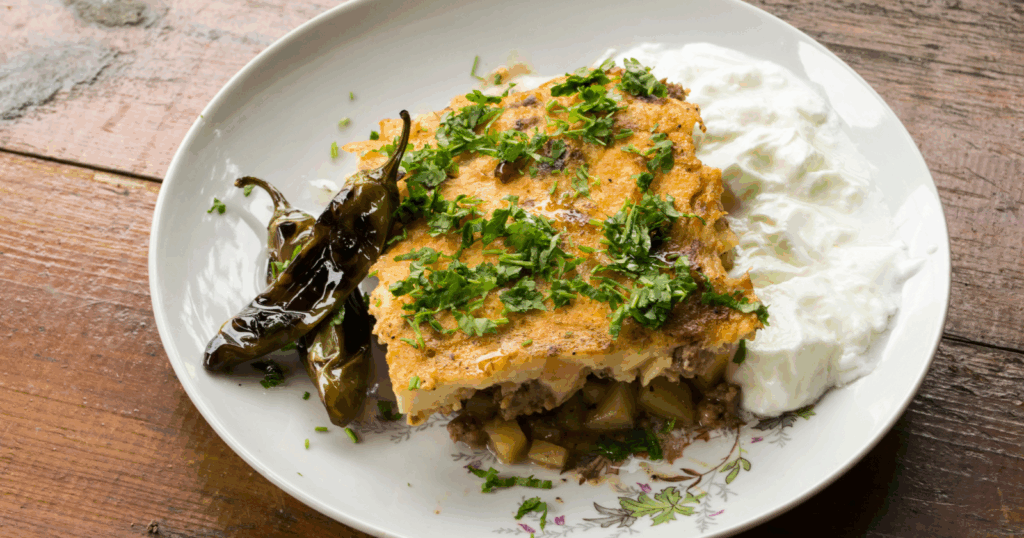
When you cut into it, you should see distinct layers. The knife should meet gentle resistance from the crusty top, then glide through creamy béchamel, tender eggplant, and that rich filling. Each forkful should hold together on the way to your mouth, not collapse into component parts.
A proper vegetarian moussaka proves that plant-based cooking isn’t about substitution or compromise. It’s about understanding ingredients and techniques well enough to create something that stands on its own merits. Master this dish and you’ve got something that’ll impress everyone at your table, regardless of their dietary preferences. More importantly, you’ve learned skills that’ll elevate everything else you cook: proper vegetable preparation, building complex flavors, and the patience to let a dish develop properly.
The real victory isn’t just the moussaka itself. It’s knowing you can tackle any traditional dish and make it yours without losing what makes it special in the first place.
Comments