How to make a proper saag paneer that has the right texture, the right spice balance, and nothing that tastes like it came from a jar

- Updated on Apr 29, 2026
Look, I’ll be straight with you. Most saag paneer recipes online are either way too complicated or they produce something that tastes like it came from those sad little jars at the supermarket. You know the ones. They’re gloopy, they’re sweet in all the wrong ways, and they leave you wondering why you didn’t just order takeaway.
The real issue? Most recipes don’t understand what makes this dish work. They pile on cream like it’s going out of style. They use frozen spinach blocks that turn everything watery. They tell you to dump in garam masala at the end and call it authentic.
I learned to make proper saag paneer from someone who taught me that this dish is about balance, not just throwing greens and cheese together. It’s about building layers of flavor, controlling moisture, and treating paneer like the delicate ingredient it actually is.
Why most saag paneer fails before you even start cooking
The biggest mistake happens at the grocery store. People grab whatever greens look decent and assume it’ll work out. But here’s the thing: traditional saag uses mustard greens mixed with spinach. That slight bitterness from the mustard greens? That’s what stops the dish from being one-note.
If you can’t find mustard greens, mix your spinach with some arugula or even a handful of kale. You need that complexity. Pure spinach saag is like listening to a song with the bass turned off.
Then there’s the paneer problem. Store-bought paneer can be fine, but it’s often too firm and rubbery. I make my own when I have time (literally just milk and lemon juice), but if you’re buying it, here’s the trick: soak those cubes in hot salted water for 10 minutes before cooking. It changes everything. The paneer becomes softer, more absorbent, and won’t squeaky against your teeth.
The blanching secret that changes everything
This is where technique matters more than ingredients. You need to blanch your greens properly, and I mean properly. Not just dunking them in hot water for a few seconds.
Get a big pot of water boiling hard. Salt it like pasta water. Drop your greens in for exactly 2 minutes. While they’re cooking, prepare an ice bath that’s actually icy. Not just cold tap water with three sad ice cubes floating around.
The moment those 2 minutes are up, transfer everything to the ice bath. This isn’t just about keeping the color bright green, though that matters. It’s about controlling the final texture. Properly blanched and shocked greens blend smooth without turning into baby food.
After the ice bath, squeeze those greens like your life depends on it. I mean really squeeze them. Roll them in a clean kitchen towel if you need to. Water is the enemy of good saag paneer. It dilutes flavors and makes everything taste like nothing.
Building the flavor base without shortcuts
This is where patience becomes a practice. In my kitchen, I treat cooking as a form of meditation. Each step has its purpose, its rhythm. You can’t rush the base.
Start with ghee if you have it, or butter if you don’t. Heat it until it shimmers. Add cumin seeds and let them dance around until they smell nutty. Then comes the onion, and here’s where most recipes mess up: they tell you to cook it until translucent. Wrong. You want it golden brown, almost caramelized. This takes at least 10 minutes on medium heat. Don’t rush it.
While the onions cook, I grind my own ginger-garlic paste. Store-bought works, but fresh hits different. Equal parts ginger and garlic, a splash of water, blend until smooth. Add this to your golden onions and cook until the raw smell disappears completely. You’ll know when it’s ready. The whole kitchen smells different.
Now for spices. Forget dumping in generic curry powder. You need coriander seeds (toasted and ground fresh if possible), a touch of turmeric for color, and a single bay leaf. That’s it for now. Let these cook with the base for a full minute before adding anything else.
Getting the texture exactly right
Blend your squeezed greens with just enough water to get things moving. Some recipes say to make it completely smooth. Others want it chunky. The truth is somewhere in between. You want it smooth enough to coat the paneer but with enough texture that it doesn’t look like green paint.
Add this puree to your spice base gradually. This is crucial. Dumping it all in at once drops the temperature and you lose that sizzle. Add a ladle at a time, letting each addition cook into the base.
Here’s where self-restraint matters. Every instinct will tell you to add cream now. Don’t. Let the greens and spices get to know each other first. Cook on medium-low for at least 10 minutes, stirring occasionally. The color will deepen. The flavors will meld.
Only now do you add dairy. Not cream, not half and half. Use whole milk yogurt that you’ve whisked smooth. Add it slowly, stirring constantly so it doesn’t curdle. The yogurt adds tang that cream can’t match. It keeps things light while still being rich.
The paneer finale that brings it all together
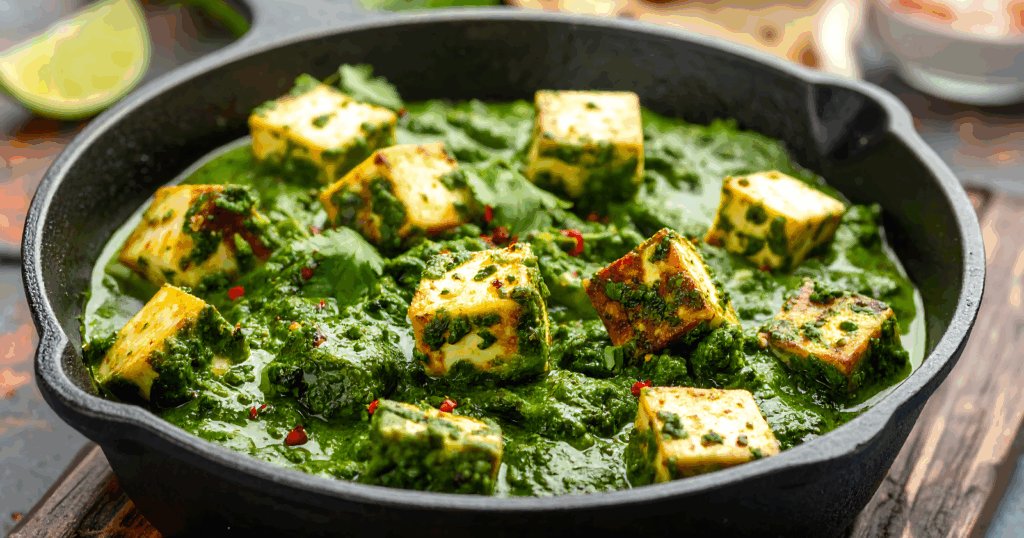
Remember those paneer cubes soaking in hot water? Drain them and pat them dry. Heat a separate pan with a bit of ghee and lightly brown the cubes on at least two sides. This isn’t essential, but it adds a layer of flavor and prevents the paneer from completely dissolving into the sauce.
Add the browned paneer to your saag during the last 5 minutes of cooking. Any longer and it turns tough. Gently fold it in, don’t stir aggressively. You want the cubes to stay intact.
The final touch? A pinch of dried fenugreek leaves (kasuri methi) crushed between your palms. This is non-negotiable. It adds a subtle sweetness and complexity that ties everything together. If you can’t find it, order it online. It’s worth it.
Taste and adjust. You might need more salt. Maybe a squeeze of lemon to brighten things up. Trust your palate.
Making this dish your own
Once you nail the basic technique, you can start playing around. Sometimes I add a handful of fresh herbs from my balcony garden right at the end. Cilantro is classic, but fresh dill works beautifully too.
The Japanese concept of kaizen applies perfectly here. Small, continuous improvements each time you make it. Maybe you discover you like a touch more ginger. Maybe you prefer the sauce a bit thicker. Each iteration teaches you something.
I’ve made this dish hundreds of times, and it’s different every time. Not wildly different, but subtly adjusted based on the greens I find, the season, my mood. Cooking isn’t about perfection. It’s about presence.
The path forward
Making proper saag paneer isn’t just about following a recipe. It’s about understanding why each step matters. It’s about respecting the ingredients and the process. It’s about not taking shortcuts just because you can.
Will your first attempt be perfect? Probably not. Mine certainly wasn’t. But it will be real, and it will be yours, and it definitely won’t taste like it came from a jar.
The beauty of mastering a dish like this is that it changes how you approach all cooking. You start to understand how flavors build, how textures develop, how patience in the kitchen translates to better food on the plate.
So clear your counter, sharpen your knife, and give yourself time. Real saag paneer can’t be rushed. But once you taste the difference, you’ll never go back to those jars again.
Comments