How to make a proper vegetarian arepas filled with black beans and avocado

- Updated on May 01, 2026
The smell of corn masa hitting a hot griddle takes me straight back to a tiny restaurant, where I watched a woman shape perfect arepas with movements so practiced they looked like meditation. Steam rose from the griddle, and the rhythmic pat-pat-pat of her hands against the dough created this hypnotic rhythm that made everyone in line fall silent.
That first bite – crispy exterior giving way to soft, warm corn, black beans spilling out with creamy avocado – taught me that sometimes the simplest foods carry the most soul.
Making arepas became my Sunday ritual after discovering them. There’s something deeply grounding about working with masa, feeling the texture change under your hands, watching something so basic transform into comfort food. The process demands presence. You can’t rush it. You can’t multitask your way through it. And that’s exactly what makes it perfect for anyone looking to slow down and create something real.
Getting the masa just right
The foundation of any decent arepa is the masa, and here’s where most people go wrong – they treat it like regular bread dough. It’s not. Arepa dough needs a completely different approach. You want pre-cooked white corn flour, specifically the kind labeled for arepas. Regular cornmeal won’t work. Trust me on this one.
Start with two cups of warm water in a bowl. The temperature matters – too hot and you’ll partially cook the flour before shaping, too cold and it won’t hydrate properly. Add a teaspoon of salt, then gradually work in two cups of flour with your hands. This isn’t a whisk situation. You need to feel the texture developing.
The dough should come together into something that feels like Play-Doh – smooth, pliable, not sticky. If it cracks when you press it, add water a tablespoon at a time. If it sticks to your hands, work in more flour gradually. This part takes practice, but after a few attempts, your hands will know the feeling you’re after.
Let the dough rest for five minutes. This gives the flour time to fully hydrate. While you wait, this is a good moment to prep your filling ingredients. Efficiency in the kitchen isn’t about rushing – it’s about using time wisely.
Shaping arepas like a pro
Divide your dough into six equal portions. Roll each into a ball between your palms, then flatten into discs about half an inch thick. The edges will probably crack at first. That’s normal. Cup the arepa in your hands and gently press the edges together while rotating it. Think of it like you’re sealing the perimeter.
The thickness matters more than you’d think. Too thin and they’ll dry out before the inside cooks. Too thick and you’ll get a raw center with a burnt exterior. That half-inch sweet spot gives you the perfect contrast – crispy outside, tender inside, with a pocket that’s just right for stuffing.
Some people use a press or roll them between plastic wrap. Skip all that. Your hands give you control and feedback that tools can’t match. Plus, there’s something satisfying about creating food with nothing but your hands and simple ingredients.
Cooking for the perfect crust
Heat a tablespoon of oil in a large skillet or griddle over medium heat. You want it hot enough that a drop of water sizzles on contact, but not smoking. Place your arepas on the griddle with space between them. They need room to breathe.
Cook for about seven minutes on the first side. You’re looking for golden-brown spots and a crust that sounds hollow when you tap it. Flip them carefully – they’re still delicate at this stage. Another seven minutes on the second side, then here’s the key move: stand them on their edge for a minute or two, rotating to crisp up the sides.
The whole process takes about 15-20 minutes. Don’t rush it by cranking up the heat. Medium heat gives you that gradual cook that creates the perfect texture gradient from crust to center.
Building the black bean filling
While your arepas cool slightly, let’s talk beans. Canned black beans work fine, but if you want to level up, cook dried beans with bay leaves and garlic. Either way, you’re not just opening a can and calling it done.
Heat olive oil in a pan, add minced garlic and diced onion. Cook until fragrant. Add your beans with their liquid, a teaspoon of cumin, half a teaspoon of smoked paprika, and salt to taste. Let this simmer and reduce until thick enough to coat a spoon. The beans should be saucy but not soupy – nobody wants filling dripping down their arms.
Mash about a third of the beans while they cook. This creates texture and helps everything bind together. Add a squeeze of lime juice at the end. That acid brightens everything up and cuts through the richness.
Assembling with avocado
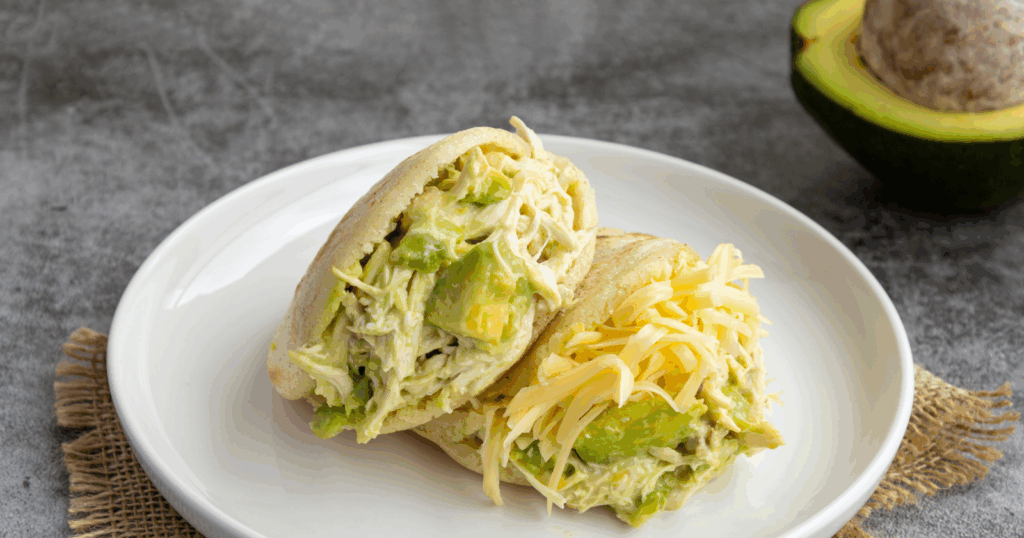
Let the arepas cool for about three minutes – just enough to handle without burning yourself. Using a sharp knife, slice them open like a pita pocket, leaving one edge intact. Be gentle. You’ve worked hard for that crust.
Spread mashed avocado on both sides of the pocket. This creates a creamy barrier that keeps the beans from making everything soggy. Season the avocado with lime juice and salt – bland avocado ruins the whole operation.
Spoon the black beans into the pocket. Don’t overstuff. You want enough filling to be satisfying but not so much that eating becomes a structural engineering problem. Top with fresh cilantro if you’re into that, maybe some hot sauce, definitely a squeeze more lime.
Making this your own
The beauty of arepas is their adaptability. Once you nail the basic technique, you can fill them with anything. Scrambled eggs and cheese for breakfast. Roasted vegetables and hummus for something lighter. The dough itself takes additions well too – try mixing in fresh corn kernels or herbs directly into the masa.
I’ve found that making arepas has become more than just cooking for me. It’s active meditation. The repetitive shaping, the patience required for proper cooking, the attention to texture and timing – it all demands presence. You might have read my post on finding mindfulness in everyday activities. This is exactly that principle in action.
The process also taught me something about perfectionism. My first dozen attempts weren’t pretty. Lopsided, burnt spots, filling everywhere. But each batch got better because I stayed curious instead of critical. That’s a life lesson worth more than any perfect arepa.
Final thoughts
Making proper arepas isn’t complicated, but it does require attention and practice. The techniques I’ve shared here come from plenty of trial and error, conversations with friends who grew up making these, and probably a hundred batches in my own kitchen.
Start with this basic recipe. Master the feel of the dough, the timing of the cooking, the balance of the filling. Then make it yours. Food becomes special not when we follow recipes perfectly, but when we understand them well enough to trust our instincts.
The next time you’re craving something comforting but want to stay present in the process, give these a shot. Set aside an hour, put on some music, and work with your hands. The worst thing that happens is you learn something for next time. The best thing? You discover a new ritual that feeds both body and mind.
Comments