How to make a proper cacio e pepe without meat — and why this Roman classic works even better as a vegetarian dish

- Updated on Apr 19, 2026
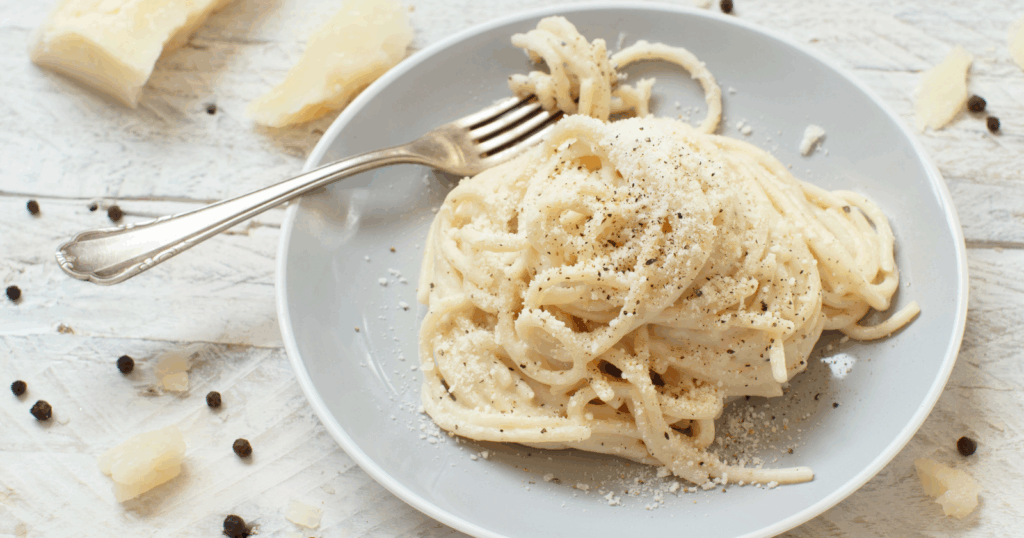
Look, I need to clear something up right away. Cacio e pepe has never had meat in it. Not in Rome, not anywhere authentic.
This isn’t about making it vegetarian – it already is. But here’s what most people miss: when you strip cooking down to just a few perfect ingredients, you’re forced to master technique. And that’s where the real self-development happens.
I learned this the hard way in a tiny trattoria in Rome. The cook, watching me photograph my plate, shook his head and said something that stuck with me: “Three ingredients. No hiding.” He was right. You can’t mask poor technique with pancetta or guanciale like in carbonara. This dish demands precision.
Why simplicity makes this dish harder (and better)
Most pasta dishes let you cheat. Throw in some protein, add extra cheese, splash more cream. Cacio e pepe gives you nowhere to hide. You’ve got pecorino romano, black pepper, and pasta water. That’s it. The magic happens in how you handle them.
This constraint forces growth. I’ve noticed the same principle applies when I’m working from my apartment – fewer tools, better focus. When you can’t rely on extras, you develop real skill. The dish becomes a meditation on timing and temperature.
The traditional Roman version teaches patience in a way that meat-heavy pastas don’t. You’re not waiting for bacon to crisp or sausage to brown. You’re learning to read the subtle signs of starch release in pasta water, the exact moment when cheese will melt into silk instead of clumping into rubber.
The pasta water is everything
Here’s where most home cooks fail before they even start. They use too much water. In Rome, they cook pasta in just enough water to cover it by a couple inches. This concentrates the starch, giving you the cloudy, thick pasta water that becomes your sauce base.
I use about 3 cups of water per half pound of pasta. Yes, you’ll need to stir more to prevent sticking. That’s fine. You’re building something here. The concentrated starch water is what binds the cheese to the pasta without any cream or butter.
Save at least a cup of this liquid gold before draining. Actually, save more. You’ll use it to adjust consistency, and having extra means you can fix mistakes. Temperature matters too – keep it hot on the stove. Cold pasta water kills the emulsion.
Getting the cheese right without clumping
Pecorino romano is non-negotiable. Not parmesan, not a blend. Pecorino’s sharp, salty bite is the entire personality of this dish. Grate it fine – I mean really fine. Pre-grated won’t work. The cellulose coating prevents proper melting.
Here’s the crucial part: let your pasta cool slightly before adding cheese. Boiling hot pasta will make the proteins seize up into clumps. I transfer my drained pasta back to the pot, off the heat, and wait about 30 seconds. You want it hot but not volcanic.
Mix your grated pecorino with a few tablespoons of warm pasta water in a bowl first. Make a paste. This pre-emulsification prevents shocking the cheese when it hits the pasta. Add it gradually, tossing constantly with tongs. The motion matters – lift and swirl, don’t just stir in circles.
The black pepper technique that changes everything
Toast your peppercorns whole in a dry pan until fragrant. Just until you smell them – about a minute. Then crush them coarsely. Not ground to dust, but rough chunks that provide texture and bursts of heat.
Half goes in with the pasta while it’s cooking for the last minute. The other half gets folded in at the end. This layering creates depth you can’t get from dumping pre-ground pepper on top.
I discovered this double-pepper method during a particularly meditative cooking session. Sometimes the best insights come when you’re not trying to force them. The pepper blooms differently at different temperatures, giving you both the mellow, integrated warmth and the sharp, fresh bite.
Bringing it all together with movement
The final assembly is pure technique. No recipe can fully capture it – you need to develop the feel. This is where cooking becomes craft.
Add your pasta to the pecorino paste gradually, tossing constantly. Pour in pasta water a splash at a time. You’re building an emulsion, like making mayonnaise. The starch and fat need to bind slowly. Too fast and it breaks. Too slow and it cools down and seizes.
Keep everything moving. I mean constantly. The motion prevents the cheese from pooling and cooking into clumps. If it looks too thick, add pasta water. Too thin? Keep tossing – the starch will tighten it up. You’re looking for a creamy sauce that coats each strand but still flows.
Why this matters beyond the plate
Mastering cacio e pepe taught me something about limitation and excellence. When I first moved to my current apartment, I pared down everything. Fewer possessions, clearer purpose. This dish works the same way.
You can’t Instagram your way through this one with fancy ingredients. You can’t buy success with expensive tools. You build it through repetition and attention. Each time you make it, you notice something new. The exact sound when the pasta water is starchy enough. The precise moment the cheese transforms from grainy to glossy.
This is what plant-based cooking has given me – the inability to hide behind easy proteins forces real skill development. It’s the same reason I keep my mornings simple with just meditation and writing. Constraints create clarity.
Making it yours
Once you nail the classic version, small variations open up. A squeeze of lemon brightens everything. Different pasta shapes change the sauce-to-noodle ratio. Some nights I add a handful of arugula at the end for color and peppery bite.
But master the original first. Make it ten times before you change anything. Let your hands learn the motion, let your eyes recognize the perfect consistency. This repetition isn’t boring – it’s meditative. Each attempt builds on the last.
The best part? This dish takes 15 minutes start to finish once you know what you’re doing. It’s become my go-to after long days when I need something grounding and real. No takeout menu can match the satisfaction of transforming three ingredients into silk.
Remember, every Roman cook makes this differently. Some swear by mixing everything in a bowl off heat. Others finish it all in the pan. The method I’ve shared works consistently for me, but you’ll develop your own rhythm. That’s the point – finding your way through constraint into confidence.
Comments