How I plan a week of vegetarian meals that my non-vegetarian husband actually looks forward to

- Updated on May 02, 2026
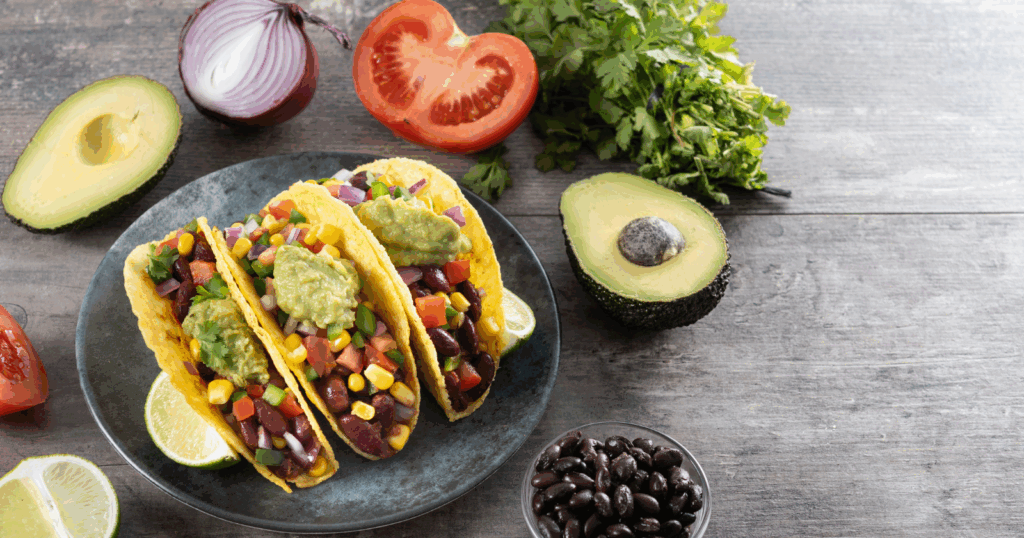
Last week, my husband texted me from work: “Are we having those mushroom tacos again soon? I’ve been thinking about them all morning.”
Five years ago, this same man considered meals without meat to be snacks, not dinner.
Now he’s the one reminding me to pick up extra limes for taco night and suggesting we try that new tahini sauce recipe his colleague mentioned.
The transformation didn’t happen overnight, and I definitely didn’t achieve it by sneaking tofu into his pasta or lecturing him about factory farming.
It happened when I stopped approaching vegetarian meal planning as a limitation and started treating it as an opportunity to make food so good that nobody notices or cares what’s absent.
Start with flavour profiles, not protein substitutes
Every Sunday afternoon, I sit down with my notebook and map out the week ahead.
But instead of starting with “meat replacements,” I think about the flavour experiences we’re craving.
Smoky and spiced? That’s harissa-roasted cauliflower with yoghurt.
Rich and comforting? Wild mushroom stroganoff with proper sour cream.
Bright and zingy? Vietnamese-style noodle bowls loaded with herbs and crispy shallots.
My husband doesn’t miss meat because I’m not trying to replicate it.
I’m creating entirely different experiences that hit the same satisfaction points.
When you nail the char on grilled halloumi, achieve the perfect crisp on roasted chickpeas, or build layers of umami in a miso-based sauce, the absence of meat becomes irrelevant.
I keep a running list of his favorite flavor combinations in my phone: maple and mustard, tahini and date molasses, smoked paprika and sherry vinegar.
When planning the week, I make sure to hit these familiar notes while leaving room for experimentation.
He’s more adventurous with my wildcard dishes when he knows his beloved chickpea curry is coming later in the week.
Build your pantry like you mean it
A successful week of vegetarian meals starts long before Sunday planning.
It starts with a pantry that works as hard as you do.
Good olive oil, coconut milk, proper vinegars, and more spices than seems reasonable.
Tahini, miso paste, harissa, and gochujang live permanently in my fridge door.
These aren’t specialty ingredients anymore; they’re the backbone of weeknight dinners.
I batch-prep certain elements that transform basic meals into something special.
Crispy fried onions in a jar. Pickled jalapeños. Toasted seeds and nuts. Herb oils.
These components take minutes to prepare on Sunday but elevate every meal they touch throughout the week.
My husband has started adding them to his weekend eggs, which feels like the ultimate victory.
The freezer holds homemade pizza dough, portioned and ready.
Good bread for toast because sometimes dinner is eggs on toast, and that’s perfectly fine if the eggs are perfectly soft and the toast is thick and buttered.
Frozen peas because they improve almost any grain bowl, pasta, or curry when fresh vegetables feel like too much effort.
Master the weekly rhythm
Our week has a rhythm now.
Monday gets something quick but satisfying from the slow cooker that’s been bubbling away all day.
Wednesday is wildcard night: whatever needs using up, whatever we’re craving, assembled into grain bowls or thrown into a stir-fry.
Friday is always pizza night, and Sunday gets the slow weekend treatment with something that fills the house with anticipation.
But the real secret is batching similar preparations.
When I’m roasting vegetables for Monday’s grain bowls, I roast extra for Wednesday’s pasta.
While the food processor is out for hummus, I’ll blitz together a green sauce for Thursday.
This isn’t meal prepping entire dishes, just creating building blocks that make weeknight cooking feel manageable.
I’ve learned to plan for reality, not Instagram.
Some weeks, we eat quesadillas twice because life happens.
Sometimes the elaborate Saturday feast becomes Friday’s leftover pizza eaten cold from the fridge.
The plan is a guide, not a contract, and building in that flexibility prevents the whole system from falling apart when reality intrudes.
Create craveable experiences
The breakthrough came when I stopped thinking about vegetarian meals as things that needed defending and started focusing on what makes any meal memorable.
Texture matters enormously.
A bowl of mushy vegetables over rice is nobody’s idea of dinner.
But that same bowl with crispy tofu, crunchy peanuts, pickled vegetables, and fresh herbs?
That’s something worth rushing home for.
I’ve identified what my husband actually missed about meat-centered meals: the ritual of grilling, the satisfaction of something substantial to cut into, the savory depth that makes you want seconds.
So I recreate those experiences differently.
Thick slices of grilled aubergine get the same char treatment as steaks.
Whole roasted cauliflower becomes an event, carved at the table.
Portobello mushrooms marinated in balsamic and soy deliver that umami punch he craves.
Temperature contrast matters too.
Hot grains with cold yogurt.
Warm roasted vegetables with chilled feta.
Ice-cold pickles on hot sandwiches.
These contrasts make vegetarian meals feel complete and considered, not like something’s missing.
Navigate the protein conversation without making it weird
Yes, protein matters, but I refuse to make meals feel like nutrition math.
Instead, I ensure every meal has something substantial that delivers both satisfaction and staying power.
Eggs feature heavily: soft-boiled on ramen, baked into shakshuka, scrambled into fried rice.
Beans and lentils appear in various forms, but only when I can make them delicious, not dutiful.
Cheese is not the enemy.
Good cheese, used generously but thoughtfully, transforms vegetables into something worth celebrating.
Halloumi grilled until squeaky, feta crumbled over everything, proper parmesan grated fresh.
My husband would choose our homemade pizza over delivery every time because I don’t hold back on the mozzarella.
Tofu and tempeh make appearances, but only when treated with respect.
That means pressing tofu properly, marinating it meaningfully, and getting it genuinely crispy.
Tempeh gets steamed before marinating to remove bitterness.
These small efforts make the difference between “eating this because it’s healthy” and “eating this because I can’t stop.”
Make vegetables the star, not the supporting act
The biggest shift in our kitchen was stopping treating vegetables as side dishes that got promoted to mains.
Instead, I approach them as ingredients worthy of the same technique and attention as any prized protein.
Brussels sprouts aren’t just roasted; they’re shaved raw into salads, deep-fried until crispy, or charred in a screaming hot pan with fish sauce and lime.
Cauliflower has become our canvas for experimentation.
Some weeks it’s buffalo cauliflower with ranch.
Others it’s a whole head rubbed with harissa and roasted until the edges are black.
Last month, I made cauliflower steaks with chimichurri that had my husband taking photos to send to his brother.
I’ve learned which vegetables deliver that satisfying chew he associates with heartier meals.
Roasted carrots left whole, not chopped.
Cabbage wedges charred in the cast iron.
King oyster mushrooms scored and seared until they’re golden.
These preparations feel intentional and substantial, never apologetic.
Embrace the gateway dishes
Certain dishes are gateway drugs to vegetarian cooking appreciation.
Shakshuka is one of them: eggs poached in spiced tomato sauce with good bread for dipping.
My husband would eat this daily if I let him.
Risotto is another winner; when you nail the technique, the result is so creamy and luxurious that everything else becomes irrelevant.
Tacos deserve their own mention. “Taco Thursday” gives us structure without monotony.
Sometimes it’s beer-battered mushrooms, sometimes black beans with all the fixings, sometimes roasted sweet potato with chipotle crema.
The format stays familiar while the fillings keep things interesting.
He now makes his own pickled onions specifically for taco night.
Pasta remains undefeated.
Not sad vegetables tossed with spaghetti, but proper sauces that simmer and develop.
Mushroom ragu that cooks for hours until it’s impossibly rich.
Burst tomato sauce with whole garlic cloves and good olive oil.
Brown butter with sage and hazelnuts.
These dishes don’t feel vegetarian; they just feel like excellent food.
The shift from tolerance to anticipation
The real victory isn’t that my husband eats vegetarian meals without complaint.
It’s that he genuinely looks forward to them, requests specific dishes, and brags about our dinners to his friends.
He knows which days the farmers’ market has the best tomatoes.
He can tell when the onions are properly caramelized.
He has opinions about which brand of coconut milk works best in curry.
Our Sunday planning sessions have become collaborative.
He suggests dishes he’s been craving or restaurant meals he wants to recreate at home.
He’s stopped seeing vegetarian food as something I impose and started seeing it as something we create together.
Last month, he bought me a new cookbook because he’d bookmarked so many recipes he wanted to try.
This transformation took time, patience, and more mediocre lentil soups than I care to remember.
But now our weekly meal plan isn’t about restriction or compromise.
It’s about abundance, creativity, and the pleasure of sharing good food.
The fact that it happens to be vegetarian? That’s just a detail, not the defining feature.
Comments