I spent a week eating my way through Indian street food and it completely changed how I cook vegetarian meals at home

- Updated on May 02, 2026
The sizzle of cumin seeds hitting hot oil.
The sharp tang of tamarind cutting through creamy dal.
Steam rising from a paper plate loaded with crispy bhel puri, the vendor’s practiced hands already assembling the next order.
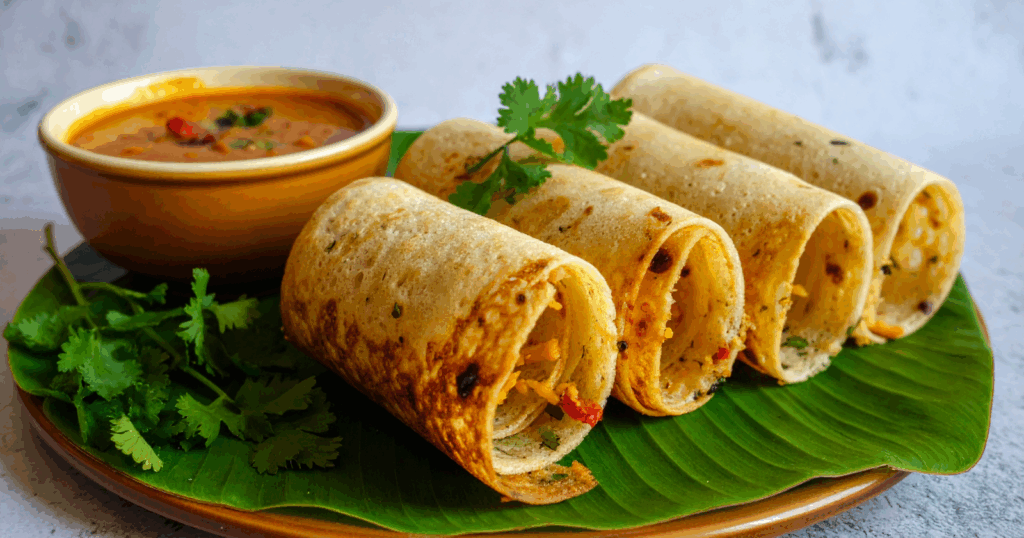
Recently, I found myself standing at a street cart watching a man flip dosas with the precision of a surgeon, and something clicked.
I’d been cooking vegetarian meals for years, but they’d become predictable. Safe.
A rotation of stir-fries, pasta dishes, and the occasional curry that never quite hit the mark.
That experience changed everything.
Not because I learned complicated techniques or discovered exotic ingredients, but because I finally understood what I’d been missing: the confidence to trust simple ingredients and bold flavors.
The revelation started with breakfast
My first morning, hungry, I watched a vendor make poha – flattened rice with mustard seeds, curry leaves, and peanuts. The entire dish took maybe four minutes.
He heated oil, threw in the spices, added the rice, and that was it.
No measuring, no timers, just pure instinct.
Back home, I’d been overcomplicating everything.
Consulting three recipes for a simple dish.
Second-guessing spice amounts.
Adding unnecessary ingredients because surely good food needs complexity. Wrong.
The vendor handed me the poha in a newspaper cone.
Each bite was perfectly balanced – soft rice, crunchy peanuts, the pop of mustard seeds.
It was meditation through simplicity, something I’d been exploring in my own practice but hadn’t connected to cooking.
The Japanese have a concept called wabi-sabi – finding beauty in imperfection and simplicity.
This street food embodied that completely.
Spices aren’t scary when you understand their purpose
Every cart I visited taught me something about spice.
Not the measurements you find in cookbooks, but the why behind each addition.
A dosa vendor explained how he tempers his sambar – heating whole spices in oil before adding them to release their essential oils.
A chaat seller showed me how black salt transforms fruit into something savory and complex.
The biggest shift happened when I stopped treating spices like precious materials to be rationed.
Street vendors use them generously, confidently.
A proper tadka needs enough cumin seeds to actually flavor the oil, not the timid half-teaspoon I’d been using.
Now my spice drawer gets actual use.
I buy whole coriander seeds and crush them myself.
The smell alone transforms the kitchen.
I keep curry leaves in the freezer and throw them into hot oil straight from frozen – they crackle and release this incredible aroma that makes everything taste like it came from a proper Indian kitchen.
The transformation goes beyond flavor.
There’s something grounding about the ritual of tempering spices.
It forces you to slow down, to pay attention.
You can’t walk away from the stove when cumin seeds are about to go from perfect to burnt in seconds.
Texture creates satisfaction without meat
Street food vendors understand something most home cooks miss: vegetarian food needs textural variety to feel complete.
Every dish I tried combined soft with crunchy, smooth with rough, wet with dry.
Take pav bhaji – mashed vegetables served with buttered bread.
The vendor added a raw onion garnish, a squeeze of lime, and crispy sev on top.
Four different textures in one dish.
Or aloo tikki chaat – crispy potato patties topped with soft yogurt, crunchy sev, and pomegranate seeds that burst in your mouth.
This changed how I build meals entirely.
Now I add toasted nuts to grain bowls.
I keep crispy fried onions in a jar for topping dal.
I learned to press tofu properly and get it genuinely crispy, not the sad, soggy cubes I used to produce.
The vendor who made the best vada pav told me something while frying his potato fritters: “People don’t miss meat when every bite is interesting.”
He was right.
Friends who love meat now request my bhel puri at gatherings.
Fresh ingredients don’t need much help
The myth about street food is that it’s heavy and greasy.
Sure, some of it is.
But most of what I ate was surprisingly fresh and light.
Vendors work with whatever came from the market that morning.
No freezers, no preserved vegetables, just real ingredients at their peak.
A woman selling bhel puri assembled each portion to order.
Rice puffs, chopped tomatoes, onions, coriander chutney, and tamarind sauce.
Mixed seconds before serving, so nothing got soggy.
The entire dish was raw except for the puffed rice.
It was basically a salad that actually tasted good.
This freshness principle transformed my meal prep.
I stopped buying pre-chopped vegetables that lose flavor sitting in plastic.
I make chutneys weekly instead of relying on store-bought sauces.
The mint chutney I learned from a samosa vendor – just mint, coriander, green chilies, and lemon blended together – beats any bottled sauce I’ve tried.
Simplicity requires confidence
The hardest lesson to internalize was that simple food isn’t inferior food.
Street vendors don’t apologize for serving dal and rice.
They don’t feel the need to add seventeen ingredients to prove their cooking skills.
This mirrors something I’ve been exploring through studying ikigai – the Japanese concept of finding purpose through simple, meaningful actions.
Cooking doesn’t need to be performance art.
It can just be nourishment, done well.
I used to think vegetarian mains needed to be elaborate to hold their own at dinner parties.
Now I serve khichdi – rice and lentils cooked together with ghee and cumin. That’s it.
Maybe some pickle on the side.
People love it because it’s cooked with confidence, not complexity.
The shift wasn’t immediate.
The first few times I made pav bhaji at home, I kept wanting to add more vegetables, more spices, more everything.
It took practice to trust that simple done right beats complicated done average.
The ripple effects beyond the kitchen
This approach to cooking has leaked into other areas.
I’ve simplified my yoga practice – fewer complicated sequences, more consistent daily practice.
My meditation practice became less about trying different apps and techniques and more about just sitting consistently.
The street food experience taught me that expertise isn’t about knowing everything.
It’s about doing a few things really well.
Those vendors weren’t consulting recipes or second-guessing themselves.
They’d made the same dishes thousands of times until the movements became meditation.
Now when I cook, I’m not performing or proving anything.
I’m just making food. Good food, but still just food.
The pressure’s gone.
Cooking became enjoyable again.
Bringing street food home
You don’t need special equipment or hard-to-find ingredients to cook like this.
Start with one dish. Master it. Make dal every week until you stop needing to measure.
Learn what properly tempered spices smell like.
Understand how salt and acid balance each other.
Buy whole spices and a cheap coffee grinder.
Get comfortable with high heat.
Stop apologizing for vegetarian food.
Trust that good ingredients prepared simply will always beat mediocre ingredients dressed up fancy.
Most importantly, cook with joy, not obligation.
Street vendors love what they do – you can see it in their movements, their pride when they hand you a perfect dosa.
Find that same satisfaction in your own kitchen.
The best meal I had was utterly simple: fresh chapati with dal and a raw onion.
The vendor had been making the same thing for twenty years.
When I asked his secret, he laughed. “No secret. Just good dal, hot chapati, and confidence.”
That’s all any of us really need.
Comments