7 vegetarian meals under 400 calories that are actually filling — and don’t taste like you’re punishing yourself for something

- Updated on Apr 10, 2026
Look, I get it. When you hear “under 400 calories,” your brain immediately conjures up images of sad desk salads and those depressing diet plates where three cherry tomatoes count as a side dish. Most people think low-calorie vegetarian meals are basically expensive ways to stay hungry.
They’re wrong.
After spending time in kitchens where home cooks have mastered the art of making lentils taste like heaven, I learned that calories and satisfaction aren’t always best friends. The real trick is understanding which foods keep you full without weighing you down, and which cooking techniques add maximum flavor without sneaking in extra calories.
These seven meals prove you can eat well, feel satisfied, and still have room in your daily calorie budget for that afternoon snack or evening glass of wine. Each one clocks in under 400 calories but packs enough protein, fiber, and flavor to keep you going for hours.
1) Spiced chickpea and spinach curry (380 calories)
This dish changed my entire perspective on filling meals. A street vendor served me something similar in a steel bowl, and I couldn’t believe how satisfied I felt afterward.
Start with one cup of cooked chickpeas (about 270 calories), then add them to a pan with fresh ginger, garlic, and a teaspoon of garam masala. Throw in two massive handfuls of spinach (practically calorie-free), a quarter cup of crushed tomatoes, and let everything simmer. The chickpeas provide the protein and fiber that keep hunger at bay, while the spices make every bite interesting.
The secret weapon here is the liquid from the chickpea can. That starchy water helps create a creamy sauce without adding any dairy or coconut milk. Your brain registers this as comfort food, but your body gets exactly what it needs without the excess.
2) Mushroom and cauliflower rice stir-fry (320 calories)
Cauliflower rice might sound like peak diet culture nonsense, but hear me out. When you treat it right, it becomes something genuinely satisfying rather than a poor substitute for the real thing.
Pulse a medium head of cauliflower in your food processor until it resembles rice grains. Sauté it with a pound of mixed mushrooms (shiitake, oyster, whatever you can find), soy sauce, sesame oil, and loads of garlic. The mushrooms bring that meaty, umami depth that makes your taste buds happy, while providing only about 40 calories per cup.
Top with sesame seeds and scallions. The combination of textures and that savory-nutty flavor profile makes this feel like takeout, except you won’t crash an hour later.
3) Mexican black bean soup (350 calories)
During my morning yoga practice, I often think about what I’ll cook that evening. It’s become part of my mindfulness routine, planning meals that nourish without overwhelming. This soup regularly makes the rotation.
Cook one cup of black beans with vegetable broth, cumin, smoked paprika, and jalapeños. Blend half the mixture to create a creamy base while keeping the other half whole for texture. The dual consistency tricks your stomach into thinking you’ve eaten more than you have.
Add corn kernels, diced tomatoes, and fresh lime juice. Serve with a tablespoon of Greek yogurt instead of sour cream, and scatter cilantro on top. The protein-fiber combo from the beans provides steady energy, while the spices keep your metabolism humming.
4) Zucchini noodles with roasted red pepper sauce (290 calories)
Spiralized vegetables often disappoint because people try to make them behave like pasta. Stop doing that. Embrace what they actually are: a vehicle for incredible sauces that would overwhelm regular noodles.
Roast two red bell peppers until charred, then blend with garlic, a small handful of almonds, and vegetable broth. This creates a sauce that’s rich and creamy at about 100 calories per serving. Spiralize three medium zucchini and quickly sauté them until just tender.
The magic happens when you toss everything together with fresh basil and a sprinkle of nutritional yeast. The slight crunch of the zucchini noodles combined with that smoky-sweet sauce satisfies in a completely different way than traditional pasta. You finish the bowl feeling energized rather than ready for a nap.
5) Egg white shakshuka (340 calories)
Traditional shakshuka uses whole eggs, but switching to egg whites cuts calories while boosting protein. This isn’t about fear of egg yolks. It’s about creating room in your calorie budget for the things that make this dish special.
Simmer crushed tomatoes with bell peppers, onions, cumin, and harissa paste. Create wells in the sauce and pour in the whites from four eggs. Cover and let them poach gently. The key is building layers of flavor in that tomato base so intense that you forget you’re eating something healthy.
Finish with fresh parsley and a piece of whole grain pita on the side. The combination of protein from the eggs and fiber from the vegetables creates lasting fullness, while the North African spices make every bite an adventure.
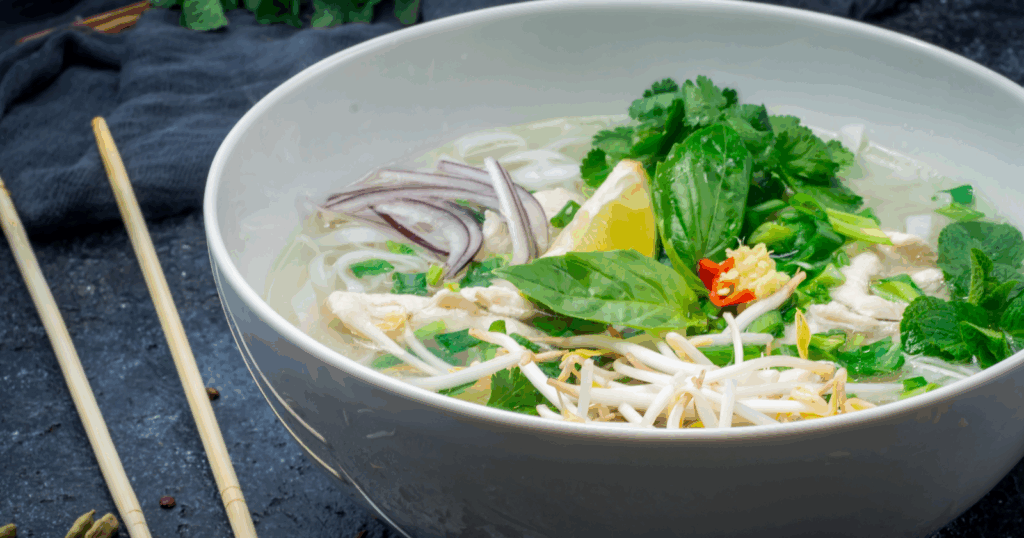
6) Vietnamese-style vegetable pho (310 calories)
Building flavor without fat requires patience, something I learned while transitioning from my corporate marketing role to writing. The best things develop slowly, whether that’s a piece of writing or a proper broth.
Char ginger and onions directly over your stove flame, then simmer with star anise, cinnamon, and vegetable stock for 30 minutes. Strain and season with soy sauce and a touch of sugar. Cook rice noodles separately (about 190 calories for a serving), then assemble with raw bean sprouts, herbs, and thinly sliced vegetables.
The hot broth cooks the vegetables just enough while preserving their crunch. Between the warm liquid, the chewy noodles, and all those fresh textures, your stomach stays satisfied for hours. Plus, eating with chopsticks naturally slows you down, letting fullness signals reach your brain.
7) Roasted vegetable and quinoa bowl (395 calories)
Sometimes the simplest combinations work best. This bowl proves that roasting vegetables properly can transform basic ingredients into something crave-worthy.
Toss Brussels sprouts, carrots, and red onion with a teaspoon of olive oil and roast at high heat until caramelized. The natural sugars that develop during roasting provide sweetness without adding calories. Serve over half a cup of cooked quinoa, then drizzle with tahini thinned with lemon juice and water.
Add fresh herbs and pomegranate seeds if you have them. The quinoa provides complete protein, the vegetables bring fiber and nutrients, and that tahini dressing adds richness that makes the whole thing feel indulgent.
Making low-calorie meals that actually work
These recipes work because they respect both your hunger and your intelligence. They don’t try to trick you with fake substitutes or leave you counting down minutes until your next meal.
The common thread running through all seven is the focus on ingredients that provide genuine satiety through protein, fiber, and complex flavors rather than just bulk. When you combine smart cooking techniques with ingredients that naturally promote fullness, you create meals that satisfy on every level.
Start with one or two recipes that appeal to you. Master them, make them your own, then expand your repertoire. Pretty soon, you’ll develop an intuition for creating filling, flavorful meals that happen to be low in calories rather than suffering through low-calorie meals that happen to be edible.
The goal isn’t to eat less. It’s to eat better. These recipes prove that under 400 calories doesn’t mean under-delivering on taste or satisfaction.
Comments