How to make a proper vegetarian Thai basil stir fry that has the heat, the fragrance, and the wok char the dish is supposed to have

- Updated on Apr 28, 2026
Most vegetarian Thai basil stir fries taste nothing like what you get at a proper Thai restaurant. They’re soggy, bland, and missing that smoky edge that makes you want to keep eating even when your mouth is on fire.
The basil wilts into sad green strands, the vegetables release too much water, and the whole thing tastes like someone forgot to invite flavor to the party.
I spent months trying to crack this after returning from a trip to Thailand, where I watched street vendors work their magic over roaring flames. The difference between their versions and what most of us make at home? They understand three crucial elements: proper heat management, ingredient timing, and the confidence to let things actually char.
Why your wok needs to be scary hot
The biggest mistake home cooks make is being afraid of heat. Your pan should be so hot that a drop of water instantly vaporizes and dances across the surface. This isn’t just about temperature – it’s about creating the conditions for wok hei, that elusive breath of the wok that gives authentic stir fries their distinctive taste.
I learned this lesson the hard way in a Bangkok cooking class where the instructor literally laughed at my tentative approach to the flame. She cranked the burner until flames licked up the sides of the wok, then tossed in the ingredients with zero hesitation. The resulting dish had layers of flavor I’d never achieved at home.
Your home stove probably won’t get as hot as a restaurant wok burner, but you can still get close. Heat your wok or largest skillet over the highest setting for at least three minutes. If you’re using electric, let it go even longer. The metal should shimmer, and yes, your smoke alarm might go off. Open the windows beforehand.
Building your flavor base the right way
Traditional Thai basil stir fry gets its punch from a specific combination of aromatics and sauces. You need fresh Thai chilies (not jalapenos), real Thai basil (not Italian), and a sauce that balances salty, sweet, and umami flavors.
Start by making your sauce in advance. Mix two tablespoons of soy sauce, one tablespoon of dark sweet soy sauce (or regular soy with a teaspoon of brown sugar), one tablespoon of vegetarian oyster sauce (made from mushrooms), and a teaspoon of white sugar. This might seem like a lot of sugar, but Thai cooking relies on this balance. The sugar also helps with caramelization.
For the aromatics, pound three cloves of garlic and two to four Thai chilies together with a mortar and pestle. This releases oils that chopping alone won’t achieve. If you don’t have a mortar and pestle, mince everything as fine as possible, then use the flat side of your knife to crush it into a paste.
Choosing and preparing your vegetables
Not all vegetables work in a high-heat stir fry. You want things that can take intense heat without turning to mush. My go-to combination includes Thai eggplant cut into wedges, green beans, bell peppers, and firm tofu for protein.
The key is cutting everything uniformly and not too small. Bigger pieces mean less surface area releasing moisture. Cut vegetables into chunks about the size of your thumb. For tofu, I press it for thirty minutes, then cut it into cubes and pan-fry separately until golden before adding to the stir fry. This extra step prevents the tofu from breaking apart and adds textural contrast.
Growing Thai basil on my apartment balcony changed my approach to this dish completely. Fresh basil behaves differently than store-bought. Pick the leaves just before cooking and don’t wash them unless absolutely necessary – water is the enemy of wok hei.
The actual cooking process
This is where everything comes together, and timing becomes critical. The entire cooking process should take less than five minutes once you start. Any longer and you’re steaming, not stir-frying.
Add two tablespoons of neutral oil with a high smoke point to your screaming hot wok. Swirl to coat, then immediately add your garlic-chili paste. Stir for literally three seconds – just enough to release the fragrance without burning.
Throw in your firmest vegetables first. For me, that’s usually green beans and eggplant. Let them sit untouched for thirty seconds. This is crucial. Your instinct will be to stir constantly, but contact with the hot metal is what creates char. After thirty seconds, toss them with confidence. The vegetables should have dark spots.
Add bell peppers and pre-fried tofu next. Toss everything together for another thirty seconds, then push everything up the sides of the wok, creating a well in the center. Pour your sauce into this well and let it bubble for a few seconds before tossing everything together.
The Thai basil finale
Thai basil goes in at the very last second. Turn off the heat completely, add a huge handful of basil leaves, and toss using the residual heat. The basil should wilt slightly but remain bright green and aromatic. If it turns dark and limp, you’ve added it too early or your heat was too high at the end.
This moment reminds me of something I discovered while studying meditation practices – sometimes the most powerful action is knowing when to stop. Just like in meditation where forcing focus creates tension, overcooking the basil ruins everything you’ve built up to that point.
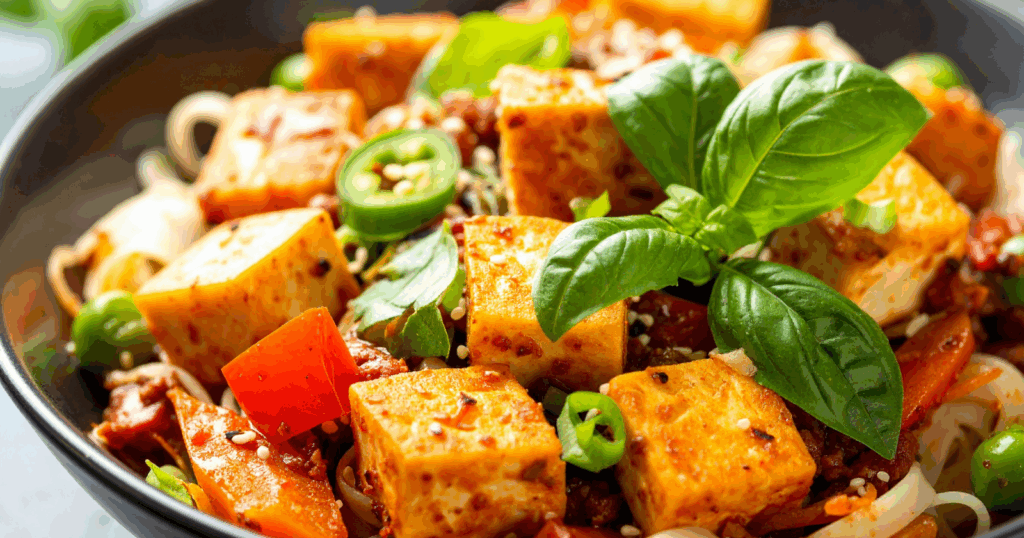
The finished dish should look slightly dangerous – glistening with sauce, dotted with char marks, vibrant with barely wilted basil. It should smell so good that everyone in your house comes to investigate. Most importantly, it should have that complex flavor that makes you close your eyes on the first bite.
Troubleshooting common problems
If your stir fry turns out watery, you’re either using too many vegetables at once or your pan isn’t hot enough. Work in batches if needed. Better to make two proper batches than one soggy mess.
If it’s not spicy enough, don’t just add more chilies to the paste. Thai chilies vary wildly in heat. Taste one before cooking and adjust accordingly. You can also add fresh sliced chilies as garnish for those who want extra heat.
If you can’t find Thai basil, don’t substitute Italian basil. Skip it entirely and add extra cilantro and mint at the end instead. The flavor won’t be traditional, but it’ll be better than the wrong basil.
Making this dish your own
Once you master the basic technique, experiment with seasonal vegetables. In summer, I add fresh corn kernels. In fall, butternut squash works beautifully if cut thin enough. The principles remain the same – high heat, quick cooking, proper timing.
The real victory isn’t just making restaurant-quality Thai basil stir fry at home. It’s understanding that sometimes growth comes from pushing past our comfort zones, whether that’s cranking up the heat on your stove or taking on any challenge that initially seems too intense. The first time you nail this dish, you’ll understand that the fear was always worse than the reality.
Comments