How to make vegetarian dumplings from scratch — easier than you think, better than anything frozen

- Updated on Apr 20, 2026
The first time I watched someone make dumplings from scratch, I was convinced it required years of practice and some kind of mystical hand coordination I’d never possess. Most people think the same thing. They see those perfectly pleated parcels in restaurants and assume there’s no way they could replicate that at home without culinary school training.
Here’s what nobody tells you: making dumplings is actually one of the most forgiving cooking techniques out there. The dough is basically impossible to mess up, the filling is just vegetables chopped and mixed, and even wonky-looking dumplings taste incredible.
After teaching dozens of friends this recipe, I’ve seen the same transformation every time. They go from nervous to confident in about fifteen minutes, then wonder why they’ve been buying frozen ones all these years.
Why homemade changes everything
Store-bought dumplings are fine when you’re in a pinch, but they’re playing in a completely different league from homemade. The wrappers are always too thick or too thin, the filling tastes like it was made last year, and half the time they split open during cooking.
When you make your own, you control the texture of the wrapper, rolling it exactly how you like it. The filling bursts with fresh vegetables you chose yourself. You can adjust the seasoning to your taste, add that extra garlic you love, or throw in whatever’s sitting in your crisper drawer.
Plus, there’s something deeply satisfying about creating these little packages with your hands. It’s the kind of repetitive, focused work that quiets your mind, similar to kneading bread or tending to plants on a balcony.
Getting your dough right without the stress
Dumpling dough is just flour and hot water. That’s it. No eggs, no oil, no complicated ratios to memorize. I use two cups of all-purpose flour and about three-quarters cup of just-boiled water. Pour the water in slowly while stirring with chopsticks or a fork. The dough will look shaggy and wrong at first. This is normal.
Once it’s cool enough to handle, knead it for about five minutes until smooth. The hot water partially cooks the flour, which gives you that characteristic chewy texture. If it feels too dry, wet your hands and keep kneading. Too sticky? Dust with more flour. This dough is remarkably forgiving.
Let it rest for at least thirty minutes under a damp towel. This is crucial. Resting relaxes the gluten and makes rolling much easier. I’ve watched home cooks make this dough before breakfast, then leave it sitting while they prepped everything else. No rush, no fuss.
Building a filling that actually tastes like something
Frozen dumplings fail because their fillings are bland afterthoughts. Great vegetarian dumplings need bold flavors and varied textures. My go-to combination is cabbage, mushrooms, carrots, and firm tofu, but this is your canvas.
Chop everything fine but not to mush. Salt your cabbage and let it sit for ten minutes, then squeeze out the water. This prevents soggy dumplings. Crumble your tofu and press out excess moisture. Sauté your mushrooms first to concentrate their flavor. These small steps make the difference between decent and incredible.
Season aggressively. Soy sauce, sesame oil, fresh ginger, garlic, and white pepper are your foundation. Add scallions for brightness. Taste your raw filling. If it doesn’t make you want to eat it with a spoon, add more seasoning. The cooking process mellows flavors, so what seems intense now will be perfect later.
The wrapping technique that actually works
Forget those Instagram-perfect pleats for now. Start with the easiest fold that still looks great. Roll your rested dough into a log and cut it into walnut-sized pieces. Keep the pieces you’re not using under that damp towel.
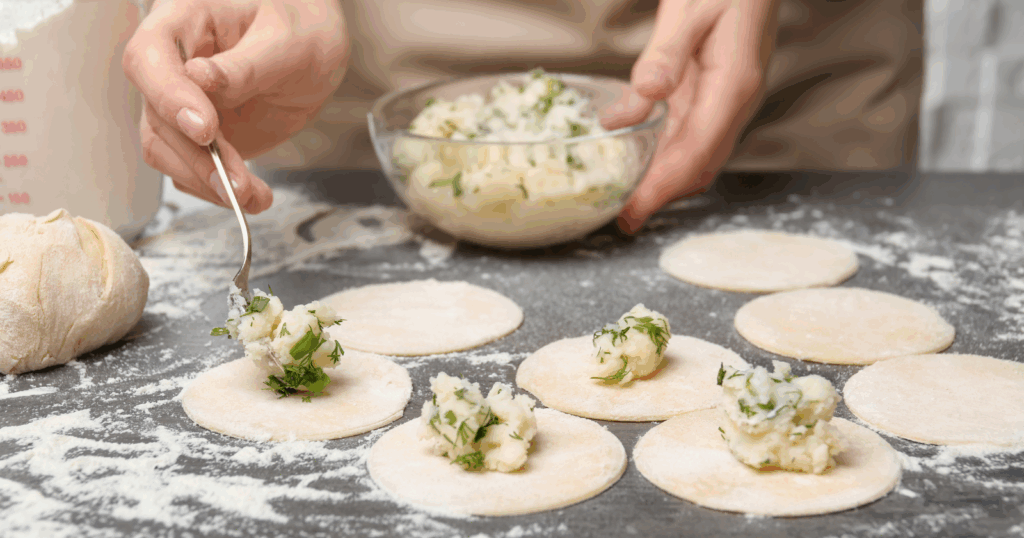
Roll each piece into a circle about three inches across. Thinner at the edges, slightly thicker in the center. Place a teaspoon of filling in the middle. Here’s the simple fold: bring the edges up around the filling and pinch them together at the top, creating a little purse. Seal it well. That’s it. No fancy pleating required.
Once you’ve made about ten this way and built some confidence, try adding one or two pleats per side. But honestly? Those simple purse-shaped ones taste exactly the same and cook perfectly. I’ve served both styles at dinner parties, and nobody cares about the pleating once they start eating.
Cooking methods that never fail
You’ve got three options, and they’re all foolproof. Boiling is the gentlest. Bring a large pot of water to a boil, drop in your dumplings, and stir gently to prevent sticking. When they float, give them another two minutes. Done.
Steaming gives you the silkiest wrapper texture. Line your steamer with cabbage leaves or parchment with holes poked in it. Steam for about twelve minutes. The dumplings won’t stick, and cleanup is nothing.
Pan-frying creates those crispy-bottomed potstickers everyone loves. Heat oil in a skillet, place dumplings flat-side down, fry until golden, then add water halfway up the dumplings and cover. The water steams them while the bottom stays crispy. This technique seemed impossible until I tried it. Now it’s my favorite.
Making this a practice, not just a recipe
The real magic of dumpling-making isn’t just the end result. It’s the process itself. There’s something meditative about the rhythm of rolling, filling, and folding. Your hands learn the motions, your mind focuses on the task, and time seems to slow down. It reminds me of tending to herbs or grinding spices by hand. These small, intentional acts of creation ground us.
Make a double batch and freeze half. Layer them on a parchment-lined tray, freeze solid, then transfer to bags. Now you’ve got homemade dumplings ready whenever you want them, except these are made with ingredients you chose and hands that cared.
Invite friends over for a dumpling-making session. Spread the ingredients across the table, pour some tea, and fold together. The conversation flows differently when your hands are busy. People open up. Stories emerge. Before you know it, you’ve made a hundred dumplings and strengthened your connections.
Moving forward with confidence
Start this weekend. Clear your counter, put on some music, and give yourself permission to make imperfect dumplings. Your first batch might look rough around the edges. Your tenth batch will be something you’re proud to serve anyone.
This isn’t about perfecting restaurant techniques or impressing anyone with your knife skills. It’s about reclaiming something simple and nourishing that industrial food production convinced us was too complicated. Once you realize how straightforward dumpling-making really is, you’ll wonder what other “difficult” techniques are actually just patience and practice in disguise.
Those frozen dumplings in your freezer? They’ll become your emergency backup instead of your regular rotation. Because once you’ve tasted what you can make with your own hands, with fresh ingredients and real intention, there’s no going back. The difference is that dramatic.
Comments