The miso soup I make from scratch when I want something light, warming, and ready in 10 minutes

- Updated on Apr 21, 2026
Sometimes the simplest dishes teach us the most profound lessons.
Last week, after a particularly intense morning of writing, I found myself standing in my kitchen craving something warm and nourishing, but without the energy for anything elaborate. My meditation practice that morning had centered on the concept of wabi-sabi – finding beauty in imperfection and simplicity. As I reached for my jar of miso paste, I realized this humble soup embodies that philosophy perfectly.
What started as a quick lunch solution has become my go-to ritual when I need to reset. The whole process takes ten minutes from start to finish, yet it grounds me in a way that few other activities can. There’s something deeply satisfying about creating something so fundamentally nourishing with just a handful of ingredients and minimal effort.
Why miso soup works as a mindfulness practice
Making miso soup from scratch isn’t just about feeding yourself. It’s about creating a small pocket of intentionality in your day. Each step requires just enough attention to pull you into the present moment without overwhelming you with complexity.
The process itself mirrors what we seek in meditation – simplicity, focus, and presence. You’re not juggling multiple pans or racing against timers. You’re simply bringing water to temperature, preparing a few vegetables, and whisking in miso paste. The repetitive motions of slicing mushrooms or stirring the broth become almost meditative.
I’ve found that this ten-minute ritual often provides the mental clarity that an hour of struggling at my desk couldn’t achieve. When you’re feeling scattered or overwhelmed, sometimes the answer isn’t to push harder. It’s to step back and do something simple with complete attention.
The essential ingredients you actually need
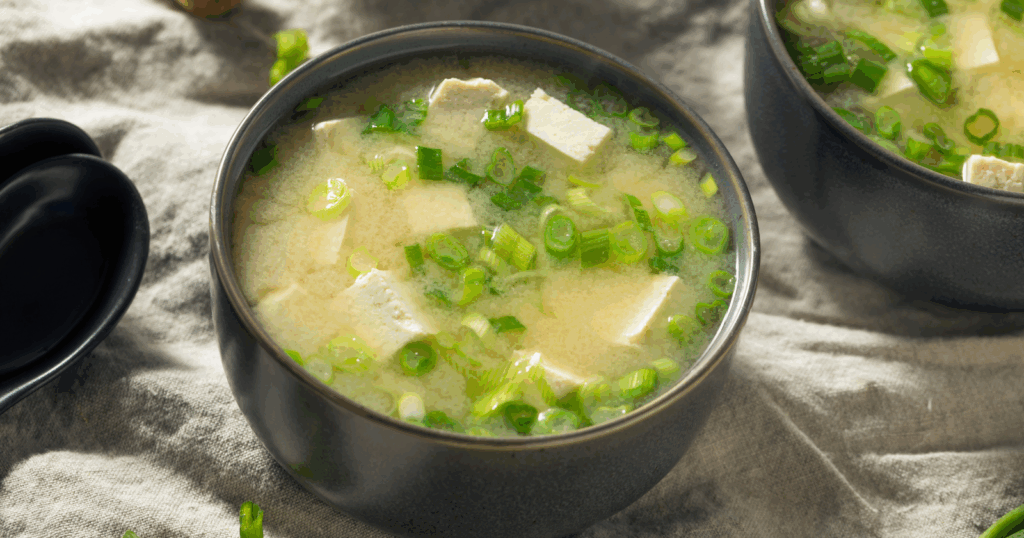
Forget the intimidating ingredient lists you see in traditional recipes. You need exactly five things to make exceptional miso soup at home: miso paste, water, tofu, scallions, and one vegetable of your choice. That’s it.
For the miso paste, I keep both white and red varieties in my fridge. White miso is sweeter and more delicate – perfect for mornings when you want something gentle. Red miso has more depth and complexity, ideal for those days when you need something with backbone. Both last for months in the refrigerator, making them perfect pantry staples.
Silken tofu is my preference over firm. It practically melts on your tongue and absorbs the broth beautifully. I buy the shelf-stable boxes that don’t require refrigeration until opened. Having a few boxes stashed away means I’m always ten minutes from a proper meal.
For vegetables, mushrooms are my default choice. Shiitake if I’m feeling fancy, regular button mushrooms when I’m not. They cook quickly and add an earthy depth that complements the miso perfectly. Sometimes I’ll use whatever needs using up – spinach wilting in the crisper, half a zucchini from yesterday’s stir-fry, even frozen corn when fresh options are scarce.
The technique that changes everything
Here’s what most recipes won’t tell you: the temperature of your water matters more than anything else. Boiling water kills the beneficial probiotics in miso and mutes its complex flavors. You want your water hot but not boiling – around 140-160°F if you’re being precise, or just below the point where tiny bubbles start forming on the bottom of the pot if you’re eyeballing it.
Start by bringing about two cups of water per serving to this sweet spot temperature. While it heats, slice your mushrooms thin – they’ll cook faster and release more flavor. Cube your tofu into bite-sized pieces. Slice your scallions, keeping the white and green parts separate.
Add the mushrooms to the warm water along with the white parts of the scallions. Let them simmer gently for about three minutes. The mushrooms will release their moisture and concentrate their flavor. This is where patience pays off – resist the urge to crank up the heat.
Now comes the crucial step. Remove the pot from heat entirely. Put a tablespoon of miso paste per serving into a small bowl or ladle. Add a bit of the warm broth and whisk until smooth. This prevents lumps and ensures even distribution. Pour this mixture back into the pot and stir gently.
Add your tofu cubes and let them warm through for a minute. The residual heat is plenty. Finish with the green parts of your scallions.
Making it your own
Once you master the basic technique, customization becomes intuitive. Some mornings I add a sheet of nori, torn into pieces, for an ocean-like depth. A few drops of sesame oil transform the entire character of the soup. Fresh ginger, grated directly into the pot, adds warmth on cold days.
I’ve learned that every household has their own version. There’s no single “correct” way. Some families add root vegetables, others prefer seaweed. Some like it thick and hearty, others light and clear. This flexibility is part of its beauty.
I’ve started adding edamame when I want more protein. Sometimes I’ll crack an egg into the simmering broth for a richer version. Leftover cooked rice turns it into a complete meal. The framework remains the same – warm water, miso, something green, something substantial – but the variations are endless.
The key is to start simple and adjust based on what your body is telling you it needs. On days when I’m feeling depleted, I make it heartier with extra tofu and vegetables. When I want something cleansing, I keep it minimal with just scallions and a lighter hand with the miso.
Why this matters beyond the kitchen
There’s a concept in Japanese philosophy called ichigo ichie – the idea that every encounter is unique and should be treasured because it will never happen again. Each bowl of miso soup I make is slightly different. The temperature varies, the vegetables change, my mood influences how much miso I add. Yet each one is perfect in its own way.
This practice has taught me to appreciate small variations rather than chase perfection. Some days the tofu breaks apart more than I’d like. Sometimes I oversalt it slightly. These aren’t failures – they’re just that day’s version of the soup.
Creating something nourishing in ten minutes also challenges our assumption that meaningful things require significant time investment. We often postpone self-care because we believe we need hours to make it worthwhile. But ten minutes of intentional cooking can be more restorative than an hour of mindless scrolling.
Your invitation to start
Tomorrow morning, or whenever you next need a reset, try this. Don’t overthink it. Don’t worry about having the “right” ingredients. Use whatever miso you can find, whatever vegetables you have, whatever tofu is available. The point isn’t perfection – it’s practice.
Set aside ten minutes. Turn off your phone. Focus on the simple acts of heating water, preparing vegetables, whisking miso. Notice the steam rising from your bowl, the umami scent filling your kitchen, the warmth spreading through your body with the first sip.
This isn’t just about making soup. It’s about proving to yourself that nourishment doesn’t require complexity. It’s about finding meditation in mundane tasks. It’s about discovering that some of life’s most satisfying moments come from the simplest actions, done with intention.
Every time I make this soup, I’m reminded that taking care of ourselves doesn’t have to be complicated or time-consuming. Sometimes the most profound act of self-care is simply stopping for ten minutes to make something warm and nourishing with our own hands.
Comments