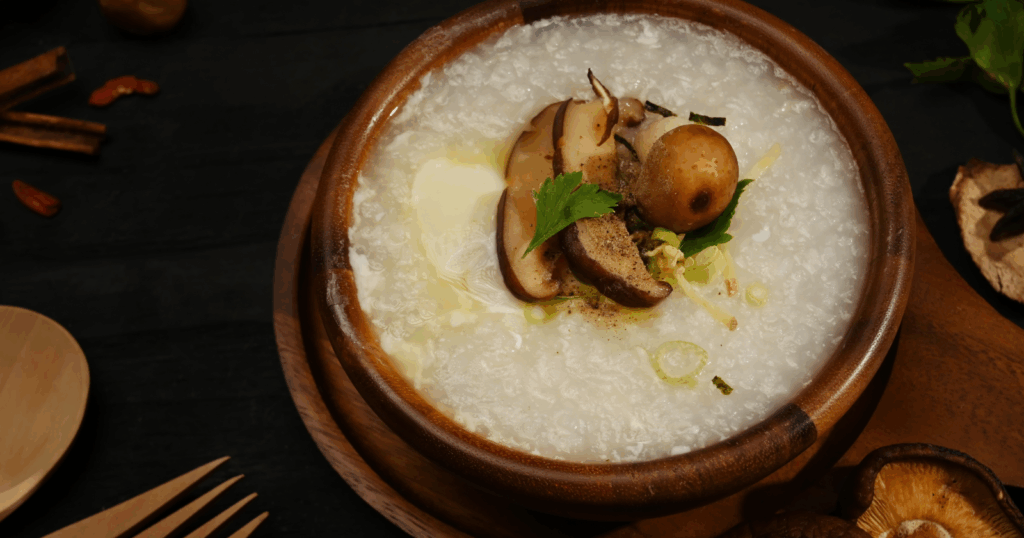
The vegetarian congee I make when I want something simple, deeply comforting, and ready before I’ve finished my first coffee

- Updated on Apr 29, 2026
Some mornings demand simplicity.
You know the ones – when you wake up and your brain feels like it’s swimming through molasses, when the thought of chopping vegetables feels like climbing Everest, when you need something warm in your belly but can’t face actual cooking. Last Thursday was one of those mornings for me. I’d stayed up too late reading, my 5:30 AM alarm felt particularly cruel, and even my usual meditation practice couldn’t shake the fog.
That’s when I turned to my failsafe: vegetarian congee. By the time I’d finished brewing my first cup of tea and watered the herbs on my balcony, breakfast was ready. No knife work, no timing multiple pans, no stress. Just pure, silky comfort in a bowl.
Why congee deserves a spot in your morning routine
Congee is essentially rice porridge – rice cooked with lots of liquid until it breaks down into creamy perfection. While it’s traditionally a blank canvas for meat and seafood across Asia, the vegetarian version I learned from a fellow yoga practitioner has become my go-to comfort food.
The beauty lies in its simplicity. You literally throw ingredients in a pot and let time do the work. No technique required. No special equipment. Just rice, water, and patience – though not much patience since we’re doing the quick version here.
What makes this perfect for self-development minded folks like us is that it creates space in your morning. While the congee bubbles away, you’re free to journal, stretch, or simply exist without the usual breakfast scramble. It’s cooking as meditation, really. The gentle bubbling becomes white noise, the steam carries the scent of ginger through your kitchen, and suddenly your morning feels intentional rather than rushed.
The base recipe that never fails
Here’s my stripped-down version that takes about 20 minutes start to finish. I use jasmine rice because it breaks down beautifully, but any white rice works. The ratio is one part rice to eight parts liquid – I go with half water, half vegetable broth for more flavor.
Start with a cup of rice in a heavy-bottomed pot. Add four cups of water and four cups of veggie broth. Throw in a thumb-sized piece of ginger, smashed with the flat side of your knife (or just tear it into chunks if you can’t be bothered). Add a tablespoon of soy sauce and a teaspoon of sesame oil.
Bring everything to a boil, then reduce to a gentle simmer. Stir every five minutes or so to prevent sticking. After about 15 minutes, the rice will start breaking down. By minute 20, you’ve got creamy congee. Season with salt and white pepper.
That’s it. That’s the whole technique. I’ve taught this to people who claim they can’t cook, and they nail it first try.
Building flavor without effort
The base congee is like a warm hug, but the toppings are where things get interesting. I keep a rotation of simple additions that require zero cooking.
Crispy fried shallots from the Asian grocery store are magic – they add crunch and deep onion flavor instantly. A soft-boiled egg transforms it into a proper meal. Frozen edamame thrown in during the last five minutes of cooking adds protein and color. Torn cilantro and scallions brighten everything up.
My husband David introduced me to adding a spoonful of chili crisp oil, which completely changed the game. The combination of heat, crunch, and umami takes basic congee to restaurant level. Sometimes I’ll add cubes of silken tofu that warm through in the hot porridge, or leftover roasted vegetables from dinner.
The point isn’t to overthink it. Congee is forgiving. It’s about using what you have and trusting your instincts. Some mornings I keep it bare bones with just soy sauce and sesame oil. Other days I go wild with five different toppings. Both approaches work.
Making it part of your morning practice
I’ve found that making congee has become its own form of morning ritual. There’s something deeply grounding about starting the day with this simple act of nourishment. While the porridge simmers, I use those 20 minutes intentionally. Sometimes I journal. Sometimes I stretch. Sometimes I just sit with my tea and watch the steam rise from the pot.
This isn’t about optimization or productivity hacking. It’s about creating a pocket of calm before the day begins. When you start your morning by making something warm and nourishing with your own hands, it sets a different tone than grabbing a granola bar while checking emails.
The repetitive stirring becomes meditative. The transformation of hard rice into creamy porridge feels like everyday alchemy. And sitting down to eat something you’ve made from scratch, even something this simple, builds self-reliance in small but meaningful ways.
Troubleshooting common congee concerns
Too thick? Add hot water and stir. Too thin? Keep simmering with the lid off. Stuck to the bottom? Lower your heat next time and stir more frequently. Bland? You need more salt than you think – congee absorbs seasoning like crazy.
If you’re worried about time, make a big batch on Sunday and reheat portions throughout the week. Add a splash of water when reheating to loosen it up. The texture won’t be quite the same as fresh, but it’s still deeply satisfying.
For those concerned about nutrition, congee is actually quite balanced when topped properly. The rice provides carbs, add protein through eggs or tofu, get your vegetables through toppings, and the ginger aids digestion. It’s comfort food that doesn’t leave you feeling sluggish.
Some people find plain congee boring. Fair enough. But that’s missing the point. Congee is meant to be a canvas. It’s the quiet background that lets other flavors shine. Once you understand this, you stop expecting it to do all the heavy lifting and start appreciating its supporting role.
Beyond breakfast
While I primarily make congee for breakfast, it’s become my answer to various life situations. Feeling under the weather? Congee with extra ginger. Need to feed vegetarian friends without stress? Big pot of congee with a toppings bar. Coming home late and exhausted? Twenty minutes to comfort.
I’ve served congee at dinner parties, bringing the pot straight to the table with bowls of toppings arranged around it. People love the interactive element, and it sparks conversations about comfort foods from different cultures. It’s unpretentious entertaining at its finest.
The skills you develop making congee transfer to other areas of cooking too. You learn to trust the process, to taste and adjust, to embrace simplicity. These lessons extend beyond the kitchen into how we approach problems and challenges in daily life.
Start tomorrow morning
You don’t need special ingredients to begin. Rice, water, salt, and whatever’s in your fridge will work. Don’t overthink it. Don’t wait for the perfect recipe or the right equipment. Just start with what you have.
Tomorrow morning, while your tea brews, put a pot of rice and water on the stove. Stir occasionally. Add what sounds good. Sit down with your bowl and actually taste what you’ve made. Notice how starting your day with this small act of creation shifts your energy.
Congee taught me that nourishment doesn’t need to be complicated. Sometimes the simplest foods are the most sustaining. They fill not just our stomachs but create space for presence in our hurried mornings. That’s worth more than any elaborate breakfast spread.
Comments