7 vegetarian dishes that are secretly perfect for beginners — no fancy equipment, no hard-to-find ingredients, just good technique

- Updated on May 03, 2026
The real secret?
Start with dishes that teach you fundamental skills while delivering maximum flavor.
Each recipe here builds your confidence with a specific technique that you’ll use forever.
No spiralizers, no mandolines, no ingredients you have to order online.
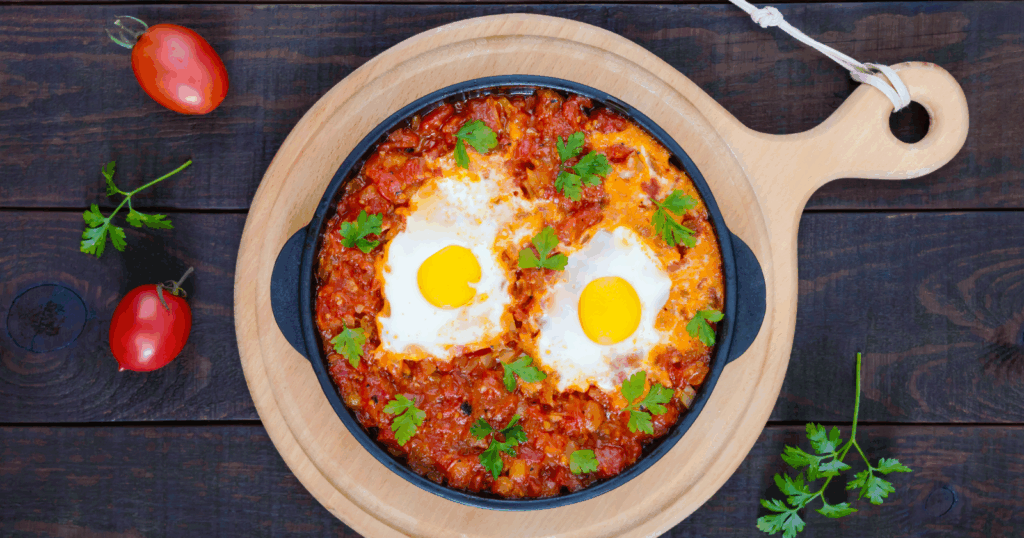
1) Shakshuka teaches you the power of building flavor layers
This North African dish changed how I think about simple ingredients.
You’re basically poaching eggs in spiced tomato sauce, but the technique transforms basic pantry staples into something extraordinary.
Start by heating olive oil and adding diced onions.
Cook them slowly until they’re soft and sweet.
Add garlic, then your spices: cumin, paprika, maybe some chili flakes.
Let them bloom in the oil for thirty seconds.
This blooming technique releases oils and intensifies flavors in ways that adding spices later never achieves.
Crush canned tomatoes with your hands as you add them.
The irregular texture beats perfectly chopped every time.
Simmer until thick, make wells with a spoon, crack in your eggs, cover, and wait.
The result looks restaurant-fancy but teaches you how professional cooks build complexity from simple beginnings.
2) Aglio e olio shows you that timing beats ingredients
Three ingredients plus pasta. That’s it.
But this dish taught me more about cooking than any complicated recipe ever did.
You’re learning to coordinate timing, control heat, and create an emulsion, which sounds technical but becomes second nature fast.
While your spaghetti cooks, warm olive oil gently with sliced garlic.
You want the garlic golden and fragrant, not brown and bitter.
This teaches heat control better than any textbook.
When the pasta is almost done, transfer it directly to the pan with some pasta water.
The starch in that water binds with the oil, creating a silky sauce that clings to every strand.
Toss everything together off the heat, adding pasta water until you get that glossy restaurant texture.
Once you master this emulsification technique, you can apply it to dozens of other dishes.
3) Dal teaches patience and the art of tempering
Making dal properly transformed my home cooking.
Not because it’s complicated, but because it introduces you to tempering, a technique that unlocks massive flavor with minimal effort.
Simmer red lentils with turmeric and water until they break down completely.
No special equipment needed, just occasional stirring and patience.
While that happens, prepare your tempering: heat oil until it shimmers, add mustard seeds until they pop, then cumin seeds, dried chilies, and curry leaves if you have them.
Pour this sizzling mixture over your cooked lentils.
The dramatic sizzle isn’t just for show.
You’re infusing the entire dish with concentrated flavor.
This tempering technique works with vegetables, rice, yogurt, anything that needs a flavor boost.
4) Proper fried rice reveals the importance of preparation
Fried rice seems basic until you learn to do it right.
The secret isn’t the wok you don’t own.
It’s understanding mise en place and high-heat cooking.
Use day-old rice from the fridge.
Fresh rice turns mushy every time.
Have everything prepped before you start: vegetables diced small and uniform, aromatics minced, and sauce mixed and ready.
Once you start cooking, everything happens fast.
Get your pan properly hot.
Add oil, swirl, then eggs. Scramble and remove.
More oil, aromatics for ten seconds, then harder vegetables first.
Keep everything moving.
Add rice, breaking up clumps with your spoon.
Return eggs, add sauce, toss twice more, done.
The whole process takes three minutes once you start, teaching you to work clean, fast, and organized.
5) Roasted vegetables unlock caramelization and seasoning
Most people think they hate vegetables because they’ve never had them properly roasted.
High heat plus oil equals caramelization, which creates complex flavors you can’t achieve any other way.
Cut everything the same size so it cooks evenly.
Toss with enough oil to coat, not drown.
Season generously with salt.
Spread on a sheet pan without crowding.
That space between pieces lets moisture escape and edges brown.
Crowded vegetables steam and turn sad.
Start checking after twenty minutes.
You want deep golden edges and vegetables that are tender but not mushy.
This technique works for any vegetable and teaches you how professional kitchens make Brussels sprouts addictive and cauliflower taste like candy.
6) Chickpea curry builds your spice confidence
This became my weekly staple after spending time observing skilled cooks.
It teaches spice layering and how to build a curry base you can adapt endlessly.
Toast whole spices in a dry pan first: coriander seeds, cumin seeds, maybe cardamom pods.
Grind them yourself or use pre-ground.
Either way, you’re learning how spices work together.
Fry onions until deep brown, not just translucent.
This takes fifteen minutes but creates the backbone of your curry.
Add ginger-garlic paste, then ground spices, then tomatoes.
Each stage builds on the last.
Add chickpeas and liquid, simmer until thick.
The beauty here is adaptability.
Once you understand this base, swap chickpeas for any protein or vegetable.
7) Spanish tortilla masters the flip and heat management
This potato omelet scared me for years.
Then I realized the flip everyone fears is just physics and confidence.
More importantly, it teaches gentle cooking and how to achieve different textures with the same ingredients.
Poach potato slices in olive oil over low heat.
You’re not frying them crispy but cooking them tender while infusing them with flavor.
Drain, mix with beaten eggs, return to a smaller pan.
Cook gently until the edges set but the center jiggles.
Here comes the flip: plate on top, flip confidently, slide back. Even if it breaks slightly, it still tastes incredible. This gentle cooking method and the confidence to flip things transform your cooking forever.
Building momentum in the kitchen
These seven dishes changed my cooking because they each taught me something I use constantly.
Master these techniques and suddenly hundreds of recipes make sense.
You stop needing special equipment because you understand how heat and timing work.
You quit hunting for exotic ingredients because you know how to make simple ones sing.
Start with whichever dish excites you most.
Cook it three times in two weeks.
The first time feels awkward, the second time you’ll notice improvements, and by the third, muscle memory kicks in.
That’s when cooking shifts from following instructions to actual intuition.
The gap between beginner and confident cook isn’t talent or fancy gear.
It’s understanding a handful of techniques and practicing them until they’re automatic.
These dishes give you those techniques while feeding you well.
Each success builds momentum for the next challenge.
Comments